


Frame planning data for AI assistance
Organise demand, due dates, work-centre capacity, labour availability, materials and planning assumptions into a reviewable input without exposing restricted business data.
Learn how AI can support demand translation, capacity checks, material readiness and production sequencing for Malaysian manufacturing teams. This proposed course uses fictional or sanitised planning data, with human verification and approval kept at every decision point; syllabus, tools and availability should be confirmed with AIGreen Plus.
Proposed course outline; tools, dates, format, duration and fees must be confirmed with AIGreen Plus.
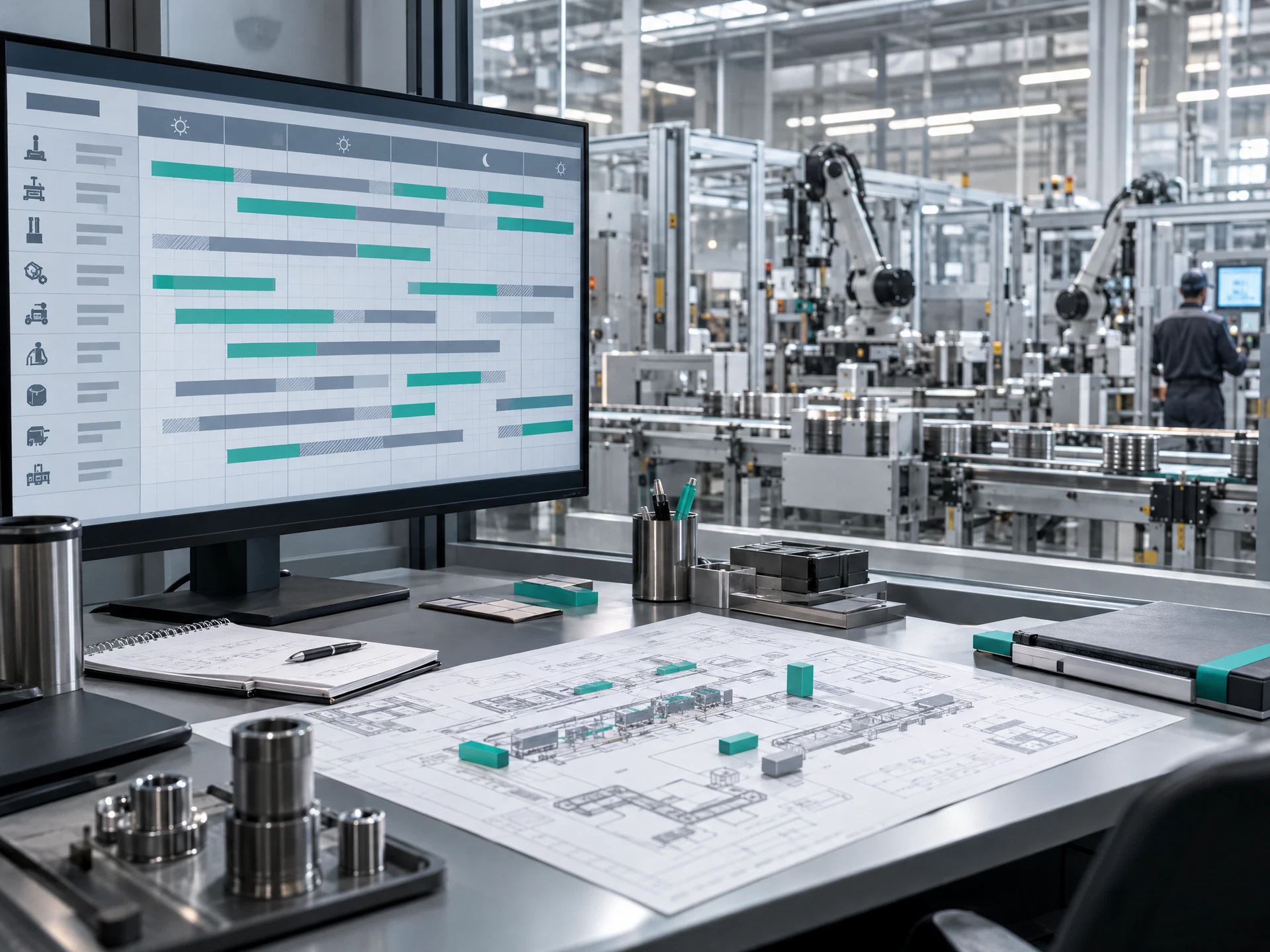
AI for Production Planning and Scheduling is a proposed course for Malaysian production planners, operations leaders and supply-chain teams. It shows how to use AI-assisted analysis and drafting to organise orders, capacity, constraints, materials, changeovers and exceptions without handing over planning authority. Exercises use fictional or sanitised factory data, and every recommendation requires human verification and approval. Confirm the syllabus, tools and availability with AIGreen Plus.
This is a proposed training outline, not a confirmed schedule or a promise of commercial results. Use fictional or approved examples and keep decisions with the responsible people.
Learning objectives describe practice, not guaranteed business results.
Organise demand, due dates, work-centre capacity, labour availability, materials and planning assumptions into a reviewable input without exposing restricted business data.
Compare AI-assisted sequencing options by capacity, priorities, changeovers, constraints and material readiness while distinguishing a suggestion from an approved schedule.
Turn fictional shortages, late orders, downtime notes and quality holds into structured questions, scenarios and action updates for planning, procurement, warehouse and operations teams.
Define data safeguards, reviewer roles, approval checkpoints and pilot measures so human planners retain accountability for commitments, safety, quality and execution decisions.
Prompt → Check → Revise → Review
Use AI to support suitable tasks. Manufacturing, quality, safety and business decisions remain with the people responsible.
Course visuals are AI-created fictional scenes; people and facilities do not depict actual AIGreen Plus staff, learners or client events.
A planning team uses a fictional order book and sanitised work-centre table to organise due dates, bottlenecks and missing assumptions. AI helps draft comparison questions; the planner recalculates capacity and approves any internal update before use.
A mock BOM, inventory snapshot and procurement note are used to prepare a material-readiness exception list for planning, purchasing and warehouse colleagues. Participants verify part references and quantities and do not treat a generated signal as a confirmed supplier promise.
A fictional line interruption and urgent order are analysed through alternative sequences. The team records trade-offs for operations and customer-service review, with human approval required before any schedule or commitment is changed.
Examples are fictional or sanitised proposals, not AIGreen Plus client case studies or verified results.
These points describe AIGreen Plus's proposed approach for this course, not an independent competitor comparison or a claim that other providers do not offer similar content. Confirm the final syllabus, tools, delivery scope and availability with AIGreen Plus.
| Potential point of difference | AIGreen Plus's approach | Why it may matter to a factory |
|---|---|---|
| Planning-first manufacturing context | The proposed learning path follows demand, capacity, materials, sequencing, exceptions and approval rather than treating AI as a generic office assistant. | Participants can connect exercises to planning conversations across production, procurement, warehouse and operations. |
| Finite-constraint reasoning | Exercises make work-centre limits, shifts, changeovers and material readiness visible before considering an AI-assisted schedule suggestion. | Teams practise asking whether a proposal is feasible instead of accepting a fluent but unsupported schedule. |
| Cross-functional review built in | The proposed activities produce reviewable briefs and questions for planners, supervisors, procurement, warehouse and business stakeholders. | Planning assumptions and exceptions are easier to challenge before an authorised owner approves action. |
| Responsible pilot orientation | AIGreen Plus's proposed approach treats AI output as draft analysis, defines safeguards and uses fictional or sanitised information with human approval. | Manufacturers can scope a low-risk learning exercise without assuming integration, access, savings or unattended decision-making. |
On small screens, scroll horizontally inside the table to compare all three columns.
Eight proposed modules are shown in a structured table for easy review. Confirm the final syllabus, depth, tools, duration and delivery format with AIGreen Plus.
On small screens, scroll horizontally inside the course outline table to see every column.
| Module | Focus | Key points | Practice exercise |
|---|---|---|---|
| 01AI Foundations for Production Planning | Understand where AI can assist planning work and where an authorised planner must retain control of the decision. |
| Review a fictional Malaysian factory planning brief, label facts and assumptions, and write a review checklist before asking AI to propose any planning support. |
| 02Preparing Demand and Order Inputs | Convert customer demand and internal priorities into clear, traceable inputs for planning analysis. |
| Use a fictional order list to create a planning-input table, flag incomplete requirements and draft questions for sales or customer-service confirmation. |
| 03Capacity, Calendars and Constraint Mapping | Map work centres, shifts, labour, equipment limits and calendar assumptions before considering a feasible plan. |
| From sanitised work-centre and shift data, ask AI to identify potential overloads, then recalculate the checks manually and mark every item requiring planner approval. |
| 04Material Readiness and Procurement Signals | Use AI-assisted review to connect production requirements with BOM, inventory and supplier follow-up information. |
| Analyse a mock material-readiness sheet and supplier-note extract, produce an exception list, and cross-check quantities, dates and part references against the source. |
| 05Sequencing, Changeovers and Priorities | Explore alternative job sequences while making changeovers, due dates, campaign logic and operational trade-offs visible. |
| Give AI a fictional queue with product families and changeover rules, compare two sequence proposals, and have a planner validate feasibility before selecting a draft. |
| 06Scenario Planning and Exception Management | Use structured what-if analysis for disruptions and late work while preserving clear ownership of recovery decisions. |
| Work through a fictional urgent-order disruption, ask AI for response options, test each against constraints, and prepare an approval brief for operations and planning leaders. |
| 07Planning Communication and Performance Review | Turn planning analysis into reviewable updates, meeting actions and useful questions for Malaysian manufacturing business teams. |
| Convert fictional planning notes into a daily coordination update and action tracker, then reconcile every figure and owner with the source record. |
| 08Governance, Pilot Design and Human Approval | Design a small, reviewable AI-assisted planning pilot with safeguards, ownership and evidence of what still needs human approval. |
| Draft a fictional pilot brief for an exception-review workflow, including data handling, reviewer sign-off, escalation paths and questions for AIGreen Plus to confirm about syllabus and tools. |
The proposed syllabus covers demand inputs, capacity and constraints, material readiness, sequencing, changeovers, disruption scenarios, planning communication and responsible pilot design. Confirm the final syllabus with AIGreen Plus.
It is intended for production planners, schedulers, operations managers, industrial engineers, supply-chain and procurement teams, and business or warehouse colleagues who review planning information.
No. AI may help organise inputs or compare draft scenarios, but authorised planners must validate constraints, materials, priorities, quality considerations and commitments before approving a schedule.
Participants map work centres, shifts, labour and downtime assumptions, then compare AI-assisted observations with the supplied records. Manual checks and planner approval remain necessary.
Yes. A module uses a fictional queue, product families and changeover rules to compare sequences and document trade-offs without treating a generated proposal as executable.
Yes, as documentation and analysis support. Learners structure mock BOM, inventory and supplier information, then ask procurement or warehouse owners to verify quantities, dates and commitments.
Use fictional or sanitised orders, capacity tables, inventory snapshots and planning notes. Do not submit confidential, personal, customer or proprietary information unless the organisation has expressly approved that use.
The specific tools and account arrangements are proposed and not guaranteed in this record. Confirm current vendor access, organisational approval, data controls and tool requirements with AIGreen Plus before delivery.
Duration, fees and commercial arrangements are not specified here. Ask AIGreen Plus to confirm the proposed delivery scope, availability and quotation.
No certification or HRD Corp eligibility is promised in this record. Verify any current recognition, documentation or eligibility directly with AIGreen Plus before making training plans.
How can a Malaysian manufacturing planning team pilot AI-assisted production scheduling without handing over schedule authority?
Use a fictional or sanitised weekly order-and-capacity review. Define demand, work-centre, labour, material, changeover and exception boundaries; configure a review worksheet or approved tool; test outputs against recalculated capacity and inventory facts with an authorised planner; then measure traceability and corrections before deciding whether to continue, revise or stop.
A practical course proposal. Select approved tools and sample data under your organisation's policy; keep operational, safety, quality and other authorised decisions with the responsible people.

Choose a recurring planning task without delegating commitments.

Define permitted inputs and retain human decision authority.

Prepare a traceable method for reviewing planning inputs.

Verify traceability while retaining human checks and approvals.

Pilot internally and use evidence to decide next steps.
Use the materials with a competent workplace owner and the appropriate approvals.
The five-stage flow uses AI-created fictional scenes; the people, equipment, interfaces and facilities are not actual AIGreen Plus staff, learners, clients or factories. Course images are category-specific examples. Pending assets are labelled in progress; unavailable artwork is suppressed rather than replaced with unrelated imagery.
Share the course title, participant roles and learning priorities. AIGreen Plus will confirm syllabus, tools, availability, delivery language, format and quotation.
Do not send confidential production data, account details or personal information in an enquiry.
