


Map requirements to evidence
Organise a requirement, process, record and owner view that helps a team identify evidence gaps without treating AI output as an authoritative interpretation of a standard.
This proposed course helps Malaysian manufacturing teams explore AI-assisted ISO documentation, evidence organisation and review workflows across operations, QA/QC, procurement and office functions. Examples use fictional or sanitised records, with current official sources, authorised owners and final syllabus, tools and availability to be confirmed with AIGreen Plus.
Proposed course outline; tools, dates, format, duration and fees must be confirmed with AIGreen Plus.
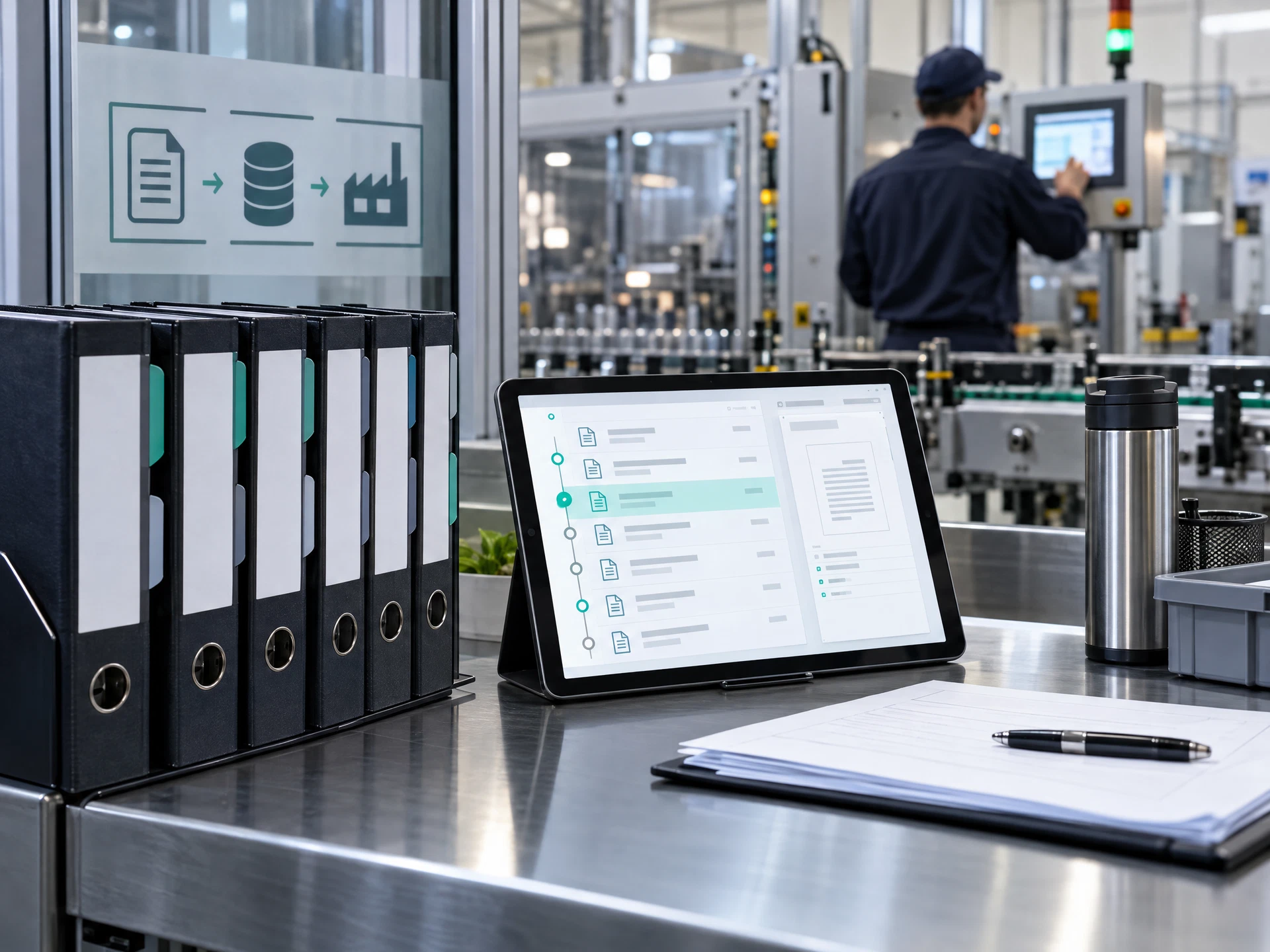
AI for ISO Documentation and Compliance is a proposed AI ISO training Malaysia course for manufacturing and industrial teams. It shows how AI may assist with requirement mapping, controlled-document drafts, evidence indexes, evidence organisation for review and corrective-action analysis, while authorised people verify sources, protect records and approve decisions. It does not establish compliance, replace auditors or provide certification.
This is a proposed training outline, not a confirmed schedule or a promise of commercial results. Use fictional or approved examples and keep decisions with the responsible people.
Learning objectives describe practice, not guaranteed business results.
Organise a requirement, process, record and owner view that helps a team identify evidence gaps without treating AI output as an authoritative interpretation of a standard.
Draft clearer procedure outlines, revision notes and document-review questions while preserving approved wording, version control and change authority.
Structure fictional audit evidence, findings questions and corrective-action information so authorised reviewers can check facts, causes, actions and closure evidence.
Set practical boundaries for privacy, source checking, human approval, escalation and pilot evaluation across Malaysian manufacturing and industrial teams.
Prompt → Check → Revise → Review
Use AI to support suitable tasks. Manufacturing, quality, safety and business decisions remain with the people responsible.
Course visuals are AI-created fictional scenes; people and facilities do not depict actual AIGreen Plus staff, learners or client events.
A QA/QC team supplies a fictional procedure register and approved process notes to create a draft requirement-to-evidence map. The quality-system owner verifies every link, resolves gaps and approves any follow-up; the AI output is not a compliance conclusion.
Operations and warehouse staff use sanitised inspection, receiving and traceability records to organise an evidence index and neutral interview questions. Dates, quantities, identifiers and source locations are checked by authorised reviewers before use.
A procurement and quality team structures a fictional supplier issue, containment note and corrective-action evidence into a review brief. Human owners validate causes, risk, actions and closure, while current official sources and organisational procedures remain the reference.
Examples are fictional or sanitised proposals, not AIGreen Plus client case studies or verified results.
This is AIGreen Plus's proposed course approach, not an independent competitor comparison or a claim that other providers lack similar content. Confirm the final syllabus, tools, delivery details and availability with AIGreen Plus.
| Potential point of difference | AIGreen Plus's approach | Why it may matter to a factory |
|---|---|---|
| ISO workflow context | The proposed learning path follows requirement mapping, controlled documents, evidence, evidence organisation for review and corrective-action review. | Manufacturing teams can relate the exercises to QA/QC, production, warehouse, procurement and office coordination. |
| Human-led compliance boundaries | AI is positioned as documentation and analysis support, while authorised owners, auditors and regulated professionals retain interpretation and approval. | Learners practise checking facts and escalating uncertainty instead of treating generated text as proof of compliance. |
| Traceable practice | Exercises use fictional or sanitised records and require links back to approved sources, identifiers, reviewers and open questions. | Teams can rehearse safer evidence handling without exposing live confidential factory or supplier information. |
| Pilot-minded adoption | The proposed final module turns a low-risk documentation use case into a bounded pilot with safeguards and evaluation questions. | An organisation can confirm fit, tool approval and scope before deciding whether to proceed. |
On small screens, scroll horizontally inside the table to compare all three columns.
Eight proposed modules are shown in a structured table for easy review. Confirm the final syllabus, depth, tools, duration and delivery format with AIGreen Plus.
On small screens, scroll horizontally inside the course outline table to see every column.
| Module | Focus | Key points | Practice exercise |
|---|---|---|---|
| 01ISO documentation, AI scope and responsible use | Establish how AI may support ISO-related documentation while authorised owners retain interpretation, compliance, safety and approval decisions. |
| Classify a fictional Malaysian factory ISO request into safe drafting, source-checking and human-approval steps, then mark information that must not be entered into an unapproved tool. |
| 02Requirement-to-process and evidence mapping | Turn an approved requirement set into a reviewable map linking processes, owners, records and evidence locations. |
| Use a sanitised production-and-QA process map to draft an evidence matrix, then have the process owner correct unsupported links and missing records. |
| 03Controlled procedures and work instructions | Use AI to improve document structure and clarity without changing controlled requirements, responsibilities or approval routes. |
| Compare an AI-assisted rewrite of a fictional machine-changeover instruction with its source, identify altered meaning and prepare questions for the document owner. |
| 04Records, traceability and evidence indexes | Organise quality, production, warehouse and procurement records into an evidence index that remains traceable to the original record. |
| Build a draft evidence index from fictional inspection, receiving and supplier records, then verify every entry against the supplied register and flag uncertain fields. |
| 05Internal review documentation and interview prompts | Organise evidence notes and neutral review questions without allowing AI to make audit findings or replace an authorised auditor. |
| Create a fictional internal-audit question set for a production line and warehouse process, then remove leading assumptions and obtain reviewer approval before use. |
| 06Nonconformity and corrective-action support | Structure nonconformity information and CAPA discussions while leaving cause validation, risk decisions and closure approval to authorised personnel. |
| Work from a sanitised fictional defect record to draft a CAPA review brief, then distinguish verified facts from hypotheses and list evidence needed before closure. |
| 07Cross-functional environmental, safety and supplier records | Coordinate documentation across procurement, EHS, sustainability and supplier-quality workflows without making regulated or standards-based determinations. |
| Assemble a fictional supplier-and-site evidence brief covering a purchase, waste record and safety observation, then route each statement to its authorised reviewer. |
| 08Governance, approval and a controlled pilot | Design a small, reviewable AI documentation pilot with clear boundaries, reviewers, escalation and evaluation questions. |
| Draft a pilot brief for a fictional ISO evidence-index task, including safeguards, responsible owner, review log and questions for confirming scope with AIGreen Plus. |
It is a proposed course on using AI to assist ISO-related documentation, evidence organisation, evidence organisation for review and corrective-action analysis. It does not establish compliance, replace an auditor or issue certification.
The proposed syllabus covers responsible AI use, requirement mapping, controlled documents, traceable records, internal-evidence organisation for review, CAPA support, cross-functional evidence and pilot governance. Confirm the final scope with AIGreen Plus.
No. AI may organise information and draft review questions, but authorised process owners, auditors and relevant professionals must interpret current requirements, evaluate evidence and make compliance decisions.
Only if the organisation confirms that scope. ISO/IEC 27001 addresses information-security management systems; any discussion here is limited to documentation support and current-source review, not interpretation, conformity assessment or certification. Confirm applicability with the authorised information-security owner.
Yes. Proposed examples use Malaysian factory and industrial-team contexts such as production, QA/QC, warehouse, procurement, supplier records, sustainability and office coordination, using fictional or sanitised information.
Only if the organisation has explicitly approved that use and the tool's current terms and controls are suitable. The exercises use fictional or sanitised records; follow internal privacy, security and document-control rules.
AI can help structure a draft or highlight clarity questions, but it must not silently change requirements. The document owner must check the approved source, revision history and approval route before release.
AI may organise evidence, draft neutral questions and separate facts from hypotheses. It must not issue audit findings, decide root cause, approve risk treatment or close corrective actions.
Tools, account access and availability are not guaranteed in this draft. Use only organisation-approved tools, verify current vendor access and obtain confirmation from AIGreen Plus before delivery.
They are not specified or promised here. Confirm duration, fees, any certificate arrangement and HRD Corp eligibility directly with AIGreen Plus before planning participation or claims.
How can a Malaysian manufacturing team pilot AI-assisted ISO documentation without treating generated material as a compliance decision?
Use a bounded, authorised pilot to organise approved ISO requirements, controlled-document drafts, sanitised evidence indexes, neutral review questions and CAPA briefs. A competent quality or process owner must verify source links, facts, interpretations, privacy, safety and approval boundaries. The course does not establish compliance, replace auditors, provide certification or promise savings or performance gains.
A practical course proposal. Select approved tools and sample data under your organisation's policy; keep operational, safety, quality and other authorised decisions with the responsible people.

Select one bounded documentation task for human review.

Define approved sources, scope, traceability and review boundaries.

Prepare controlled templates for documentation and CAPA review.

Test examples against sources with a competent reviewer.

Evaluate one controlled pilot and decide next steps.
Use the materials with a competent workplace owner and the appropriate approvals.
The five-stage flow uses AI-created fictional scenes; the people, equipment, interfaces and facilities are not actual AIGreen Plus staff, learners, clients or factories. Course images are category-specific examples. Pending assets are labelled in progress; unavailable artwork is suppressed rather than replaced with unrelated imagery.
Share the course title, participant roles and learning priorities. AIGreen Plus will confirm syllabus, tools, availability, delivery language, format and quotation.
Do not send confidential production data, account details or personal information in an enquiry.
