


Frame sales tasks for AI assistance
Write structured prompts that define the sales context, intended audience, source material, output format, assumptions and required human checks.
AI for Sales and Business Development is a proposed, practical course for Malaysian sales teams and business-development professionals. Learners use fictional or sanitised account, lead, meeting and pipeline information to test AI-assisted research, qualification, messaging and follow-up with human review.
Proposed course outline; tools, dates, format, duration and fees must be confirmed with AIGreen Plus.
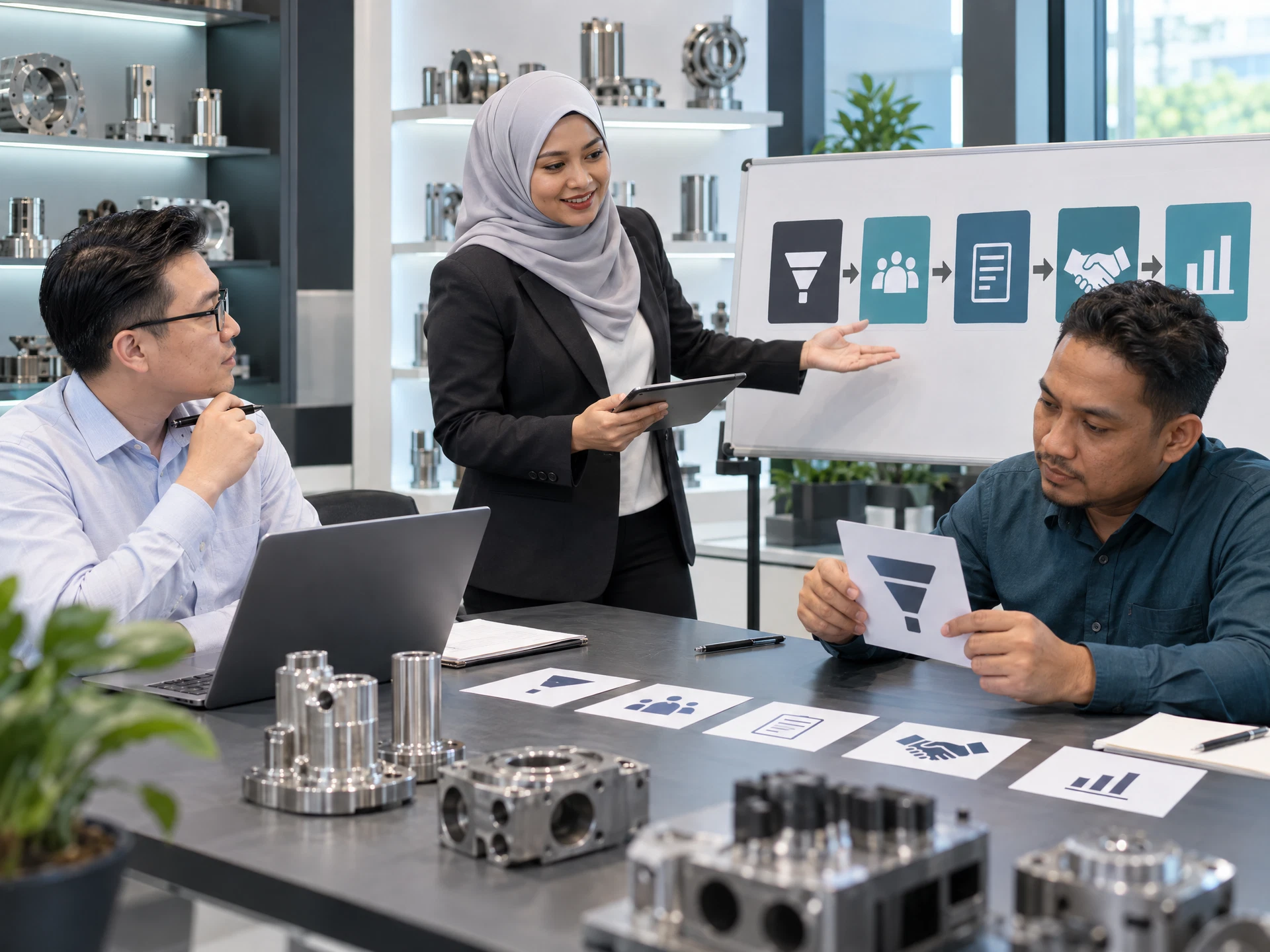
AI for Sales and Business Development is a proposed AI sales training Malaysia programme that helps sales and business-development teams organise account research, qualify leads, prepare discovery conversations, draft outreach and review pipeline notes. It emphasises approved data, transparent assumptions and human approval, so AI supports—not replaces—commercial judgement, customer commitments, pricing decisions or organisational policies. Confirm syllabus, tools and availability with AIGreen Plus.
This is a proposed training outline, not a confirmed schedule or a promise of commercial results. Use fictional or approved examples and keep decisions with the responsible people.
Learning objectives describe practice, not guaranteed business results.
Write structured prompts that define the sales context, intended audience, source material, output format, assumptions and required human checks.
Organise fictional or sanitised account information, qualification signals, discovery questions and opportunity priorities without presenting guesses as verified facts.
Prepare reviewable outreach, meeting follow-up and proposal-support drafts that reflect the recipient's role while preserving approved claims, terms and commitments.
Define data boundaries, reviewer responsibilities, quality checks and a small pilot plan for responsible AI use in sales and business-development workflows.
Prompt → Check → Revise → Review
Use AI to support suitable tasks. Manufacturing, quality, safety and business decisions remain with the people responsible.
Course visuals are AI-created fictional scenes; people and facilities do not depict actual AIGreen Plus staff, learners or client events.
A sales executive organises sanitised notes about a manufacturer's production, QA/QC, procurement and warehouse priorities into a concise account brief. The team labels evidence and assumptions, confirms the source and approves the brief before using it for discovery planning.
A business-development team uses six fictional lead records to structure qualification questions, identify missing information and prepare a role-based discovery agenda. AI suggestions remain reviewable support; the sales owner decides what to pursue and what to verify.
After a mock customer meeting, a sales team drafts a follow-up note, opportunity summary and action tracker from sanitised notes. Human reviewers check commitments, dates, pricing references and customer language before any approved CRM or spreadsheet is updated.
Examples are fictional or sanitised proposals, not AIGreen Plus client case studies or verified results.
This describes AIGreen Plus's proposed course approach, not an independent competitor comparison or a claim that other providers lack similar content. Confirm the final syllabus, delivery details, tools and availability with AIGreen Plus and compare confirmed scopes directly.
| Potential point of difference | AIGreen Plus's approach | Why it may matter to a factory |
|---|---|---|
| Role-based Malaysian business scenarios | The proposed exercises connect sales work with familiar manufacturing and office stakeholders such as operations, QA/QC, procurement, warehouse and sustainability teams. | Learners can practise translating buyer context into useful questions and drafts without relying on live customer records. |
| A workflow from research to follow-up | The outline links account research, qualification, discovery, outreach, meeting notes and pipeline review instead of treating prompting as an isolated skill. | Teams can examine where human approval belongs at each handoff in a sales or business-development process. |
| Evidence-aware commercial drafting | Exercises require participants to distinguish facts, assumptions, hypotheses and approved claims before sharing customer-facing or pipeline content. | Sales owners retain control over customer commitments, pricing, terms, relationship decisions and opportunity priorities. |
| Low-risk pilot orientation | The proposed approach ends with data boundaries, reviewer roles, quality checks and a small pilot plan rather than an unattended automation promise. | An organisation can confirm its own policies, approved tools and success questions before deciding whether to extend use. |
On small screens, scroll horizontally inside the table to compare all three columns.
Eight proposed modules are shown in a structured table for easy review. Confirm the final syllabus, depth, tools, duration and delivery format with AIGreen Plus.
On small screens, scroll horizontally inside the course outline table to see every column.
| Module | Focus | Key points | Practice exercise |
|---|---|---|---|
| 01Responsible AI Foundations for Sales Teams | Understand how AI can assist sales work while keeping data protection, customer trust and commercial judgement with authorised people. |
| Classify a fictional lead record as suitable for practice, requiring approval or unsuitable for entry into an AI tool, then write a sales-task prompt that lists assumptions and human checks. |
| 02Account Research and Ideal-Customer Profiles | Turn approved public or sanitised information into a structured account brief without presenting guesses as facts. |
| Use a fictitious Malaysian manufacturer profile to create an account brief covering operations, QA/QC, procurement and warehouse priorities, then label every statement as evidenced, assumed or requiring confirmation. |
| 03Lead Qualification and Opportunity Prioritisation | Organise lead signals and qualification questions to support consistent review, not automatic acceptance or rejection. |
| Review six fictional leads from Malaysian manufacturing and office-service scenarios, create a qualification matrix, and explain which follow-up questions a sales manager must approve before prioritisation. |
| 04Discovery Preparation and Conversation Design | Prepare discovery agendas and role-relevant questions from approved account context while avoiding unsupported assumptions about the buyer. |
| Build a discovery plan for a fictional operations manager considering an AI-assisted reporting project, including questions for production, QA/QC and procurement stakeholders and a review of hidden assumptions. |
| 05Outreach, Value Messages and Proposals | Draft concise, audience-aware outreach and proposal sections grounded in verified needs and approved claims. |
| Draft a fictional follow-up email and a short value outline for a warehouse and sustainability team, then redline unsupported claims, unapproved commitments and details that need a human owner's confirmation. |
| 06Meeting Notes, Follow-Up and Pipeline Hygiene | Convert sanitised sales interactions into accurate action lists and reviewable next steps. |
| Turn fictional discovery notes into a follow-up email and pipeline action tracker, then cross-check every owner, date and commitment against the supplied notes before marking the draft for approval. |
| 07Business Development, Partnerships and Account Planning | Support opportunity maps and partner plans while keeping relationship decisions and commercial approvals with accountable team owners. |
| For a fictional industrial supplier exploring a distributor relationship in Malaysia, create a stakeholder and partner map, flag assumptions, and prepare a manager-review agenda for the next conversation. |
| 08Sales-performance measure review and pilot controls | Create a controlled, low-risk plan for adopting AI in sales workflows and reviewing quality over time. |
| Draft a pilot brief for AI-assisted meeting follow-up, including a fictional workflow, excluded data, responsible reviewer, approval checkpoint, quality questions and a stop-or-revise rule. |
The proposed syllabus covers responsible AI use, account research, ideal-customer profiles, lead qualification, discovery preparation, outreach, proposal support, meeting follow-up, pipeline hygiene, partnership planning and pilot governance. Confirm the final scope with AIGreen Plus.
It is intended for sales executives, account managers, business-development and partnership teams, sales managers, founders and sales-operations staff who want structured, reviewable AI assistance for commercial work.
AI can organise supplied lead signals, map qualification criteria and suggest follow-up questions. It should not automatically accept, reject or rank prospects without the responsible sales owner checking evidence, context and organisational policy.
Yes. Exercises use approved or sanitised information to build account briefs, separate facts from assumptions and prepare role-relevant discovery questions. Teams must verify information and avoid treating generated research as confirmed customer knowledge.
It can assist with reviewable drafts tailored to a defined audience and approved claims. A human must check tone, accuracy, confidentiality, pricing, contractual language and commitments before any customer communication is sent.
No. The proposed course treats AI as drafting and analysis support. Salespeople and managers retain responsibility for customer relationships, qualification decisions, pricing, terms, forecasts, approvals and escalation.
Practise with fictional or sanitised account, lead and meeting information. Any AI tool, CRM or spreadsheet should be organisation-approved; current vendor access, account features, privacy terms and integration options must be verified before use.
Yes. Proposed examples include Malaysian manufacturing accounts and cross-functional buyers in operations, QA/QC, procurement, warehouse and sustainability, alongside general office and business-development roles.
Delivery format, language, duration, fees and availability are not fixed in this proposed record. Ask AIGreen Plus to confirm the current syllabus and commercial details before planning a session.
Certificate arrangements and HRD Corp eligibility have not been confirmed for this proposed course. Verify any current recognition, eligibility or supporting documentation directly with AIGreen Plus before relying on it for planning or claims.
How can Malaysian sales teams pilot AI for account research, qualification and follow-up without delegating commercial judgement?
For AI sales training in Malaysia, start with a fictional or sanitised account, lead or meeting task, define approved data and human approval points, configure a structured method, test claims and commitments with a competent sales reviewer, then pilot a small set and document whether to continue, revise or stop.
A practical course proposal. Select approved tools and sample data under your organisation's policy; keep operational, safety, quality and other authorised decisions with the responsible people.

Select a low-risk, reviewable workflow answering a commercial question.
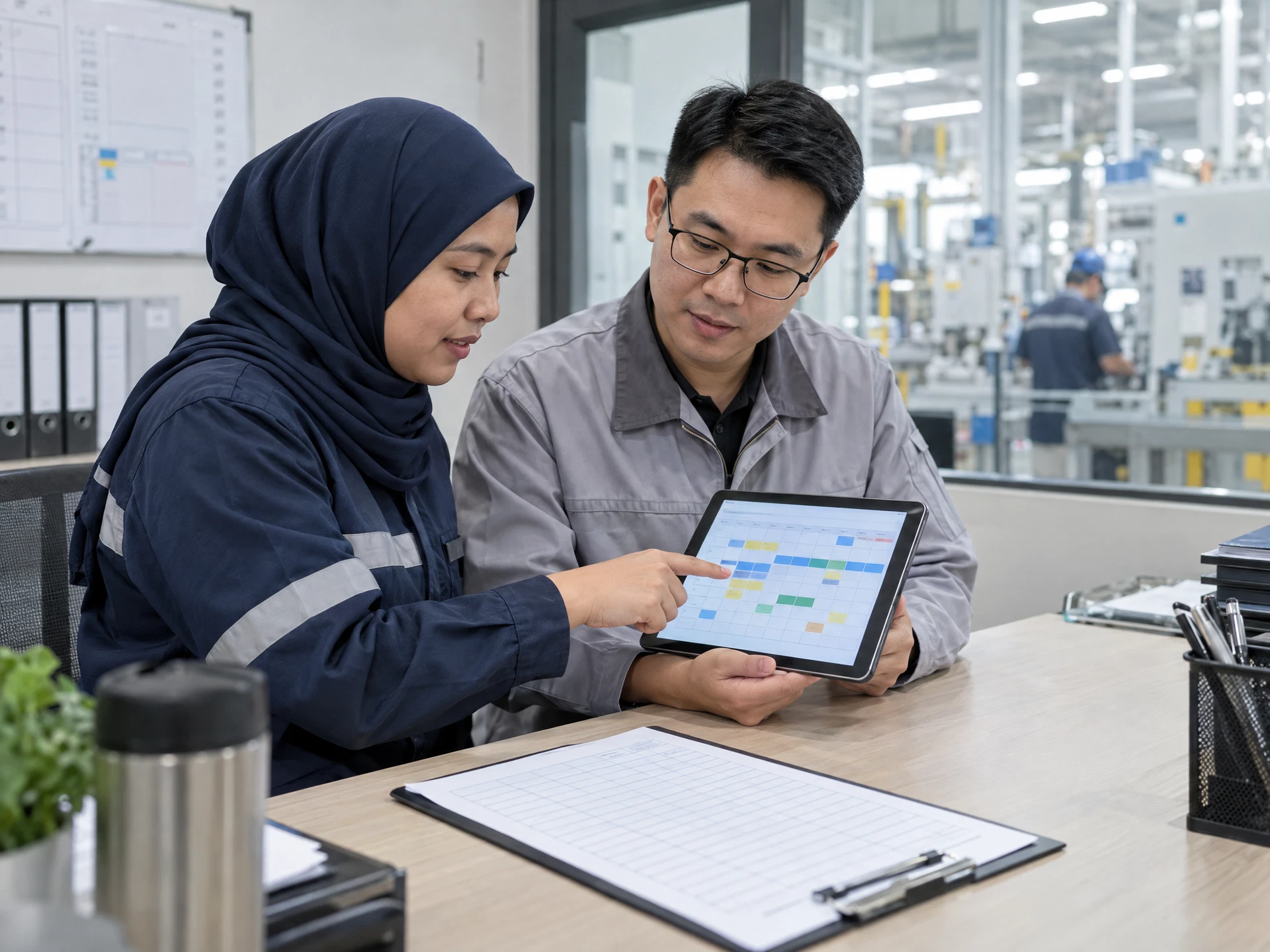
Define evidence, data handling, privacy limits and approval responsibilities.

Create repeatable prompts converting approved context into labelled outputs.
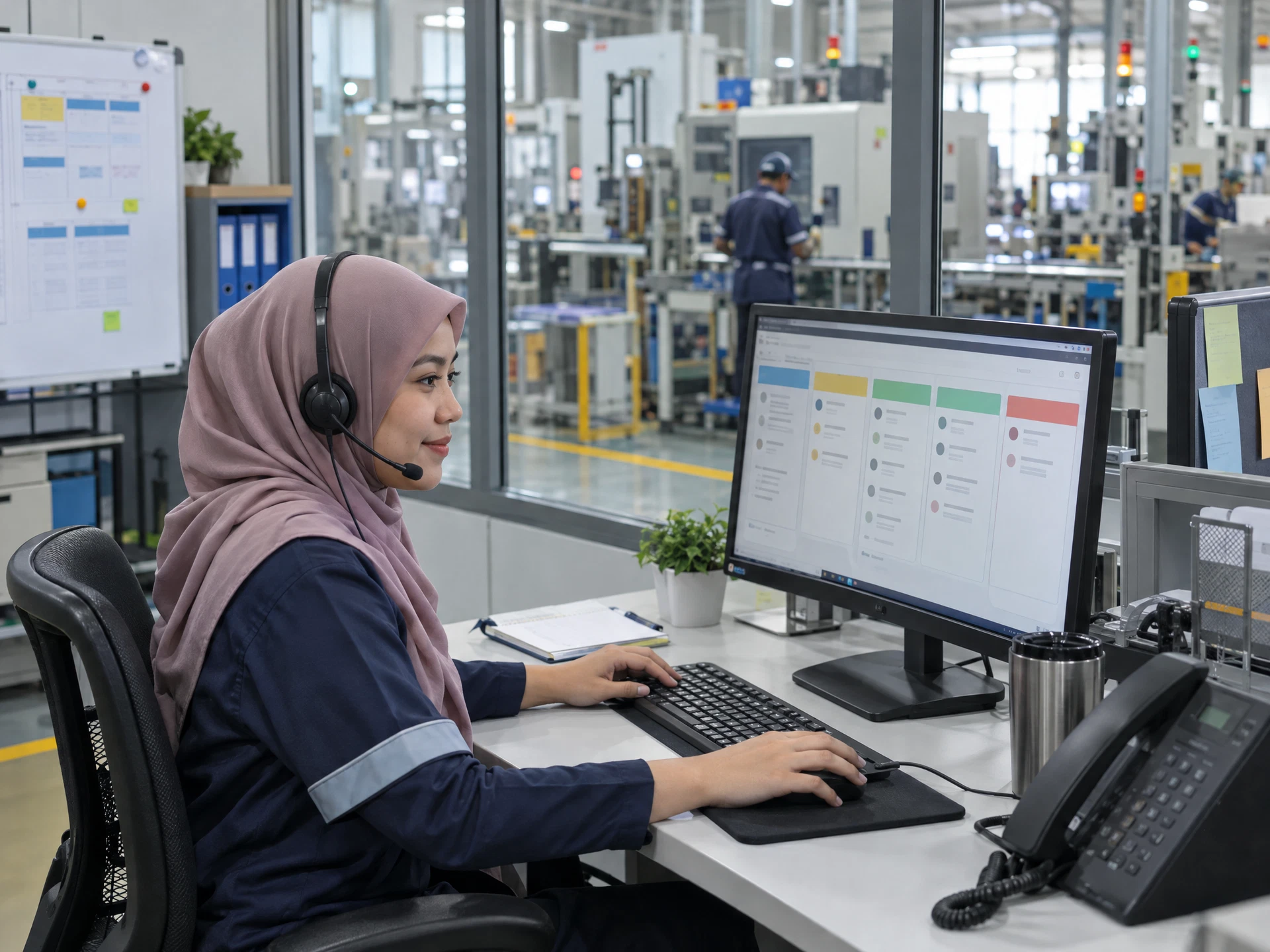
Test fictional cases with qualified reviewers verifying accuracy and claims.

Pilot sales scenarios, assess controls and decide next steps.
Use the materials with a competent workplace owner and the appropriate approvals.
The five-stage flow uses AI-created fictional scenes; the people, equipment, interfaces and facilities are not actual AIGreen Plus staff, learners, clients or factories. Course images are category-specific examples. Pending assets are labelled in progress; unavailable artwork is suppressed rather than replaced with unrelated imagery.
Share the course title, participant roles and learning priorities. AIGreen Plus will confirm syllabus, tools, availability, delivery language, format and quotation.
Do not send confidential production data, account details or personal information in an enquiry.
