


Frame projects for AI-assisted planning
Turn a project brief into clearer objectives, stakeholders, deliverables, constraints, assumptions and questions for owner confirmation.
AI for Project Management is a proposed practical course for Malaysian manufacturing and office teams that want to organise project information, plans, risks and stakeholder updates with responsible AI assistance. Exercises use fictional or sanitised examples from production improvement, warehouse, procurement and sustainability projects, with human verification and approval throughout.
Proposed course outline; tools, dates, format, duration and fees must be confirmed with AIGreen Plus.

AI for Project Management is a proposed course for Malaysian project managers, coordinators and business teams. It explains how AI can support project briefs, work breakdowns, schedules, risk and issue registers, meeting actions and stakeholder updates using fictional or sanitised scenarios. Participants learn to verify outputs, protect sensitive information and keep scope, cost, quality, safety and approval decisions with accountable project owners.
This is a proposed training outline, not a confirmed schedule or a promise of commercial results. Use fictional or approved examples and keep decisions with the responsible people.
Learning objectives describe practice, not guaranteed business results.
Turn a project brief into clearer objectives, stakeholders, deliverables, constraints, assumptions and questions for owner confirmation.
Draft reviewable work breakdowns, dependencies, milestones, action logs, risk registers and change prompts without treating generated content as an approved baseline.
Prepare concise meeting summaries, status updates and stakeholder messages for manufacturing and office audiences while checking names, dates, quantities and commitments.
Use privacy boundaries, source checking, reviewer roles, escalation routes and approval records so accountable people retain decisions about scope, cost, quality, safety and delivery.
Prompt → Check → Revise → Review
Use AI to support suitable tasks. Manufacturing, quality, safety and business decisions remain with the people responsible.
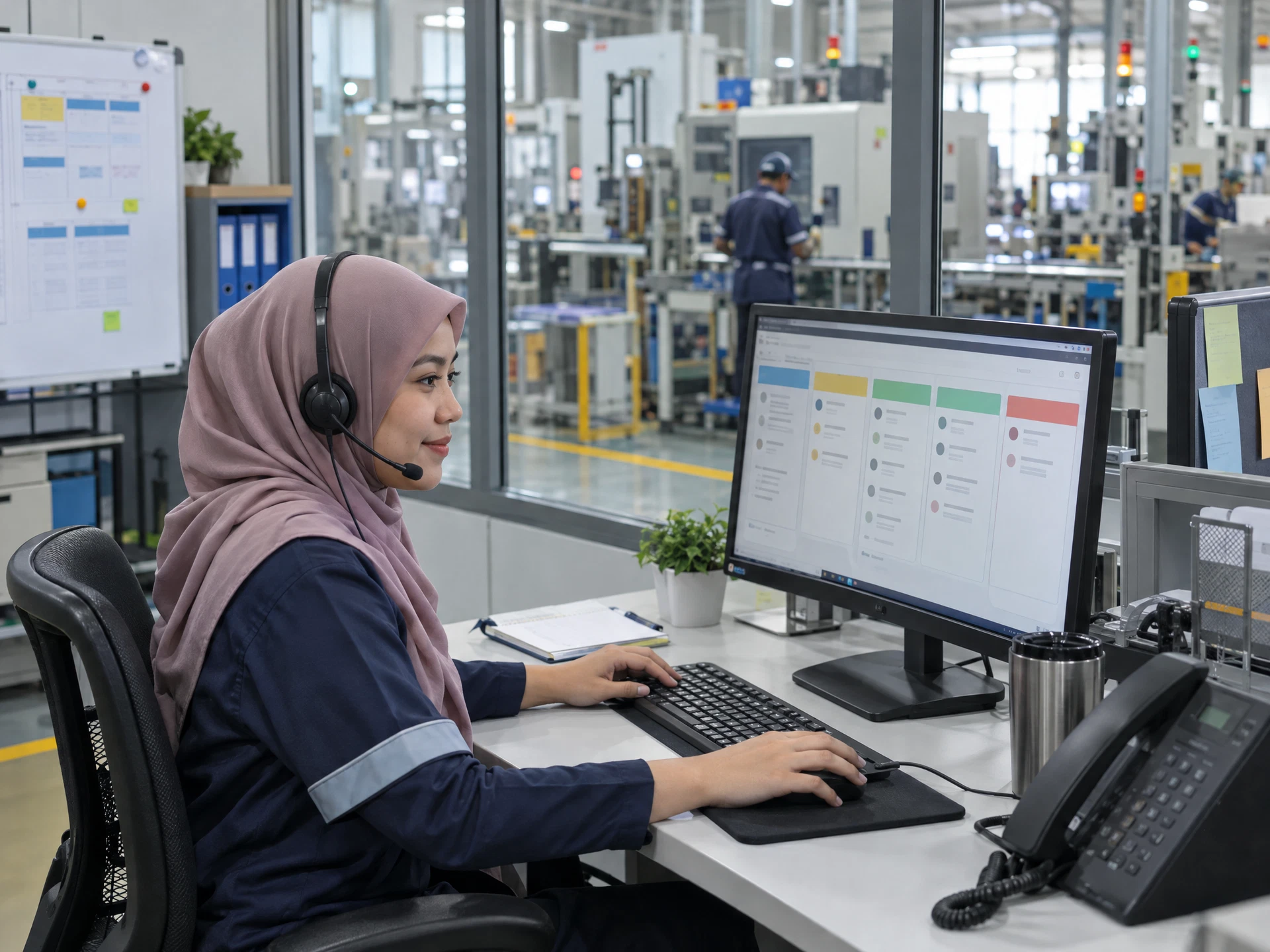
Course visuals are AI-created fictional scenes; people and facilities do not depict actual AIGreen Plus staff, learners or client events.
A project coordinator uses a fictional line-improvement brief to draft objectives, exclusions, stakeholders and open questions. The operations owner checks the source, confirms scope and approves any version shared with production or engineering.
A team structures sanitised supplier and warehouse notes into separate risks, issues, dependencies and follow-up questions. Procurement and the project owner validate facts, ratings and actions; the AI draft does not authorise a purchase or change a commitment.
An office and operations team turns fictional meeting notes into a concise update for management, with actions for data owners and QA/QC review points. Human reviewers verify figures, sources and wording before approval, and no compliance or performance claim is inferred.
Examples are fictional or sanitised proposals, not AIGreen Plus client case studies or verified results.
These points describe AIGreen Plus's proposed approach for this course, not an independent competitor comparison or a claim that other providers lack similar content. Confirm the syllabus, tools, delivery arrangements and availability with AIGreen Plus.
| Potential point of difference | AIGreen Plus's approach | Why it may matter to a factory |
|---|---|---|
| Project controls in familiar contexts | The proposed exercises connect project charters, dependencies, risks and updates to manufacturing operations, QA/QC, warehouse, procurement and office work. | Teams can practise with scenarios that resemble cross-functional initiatives without exposing live project records. |
| Evidence before polished output | Learners are guided to supply approved source material, distinguish facts from assumptions and trace drafts back to notes before circulation. | Project reporting can become easier to review without treating fluent AI text as evidence or an approved baseline. |
| Human ownership of project decisions | The proposed method keeps sponsor, project-owner, procurement, QA/QC, safety and operational approvals with authorised people. | AI supports preparation and analysis while accountability for scope, cost, quality, safety and delivery remains clear. |
| Pilot-minded adoption | The course closes with a bounded, low-risk pilot concept using safeguards and review questions rather than promised rankings, savings or business results. | An organisation can discuss a sensible starting workflow with AIGreen Plus and confirm fit, governance and availability before proceeding. |
On small screens, scroll horizontally inside the table to compare all three columns.
Eight proposed modules are shown in a structured table for easy review. Confirm the final syllabus, depth, tools, duration and delivery format with AIGreen Plus.
On small screens, scroll horizontally inside the course outline table to see every column.
| Module | Focus | Key points | Practice exercise |
|---|---|---|---|
| 01AI Foundations and Project-Owner Boundaries | Understand where AI can assist project work and where project authority, professional judgement and formal approval remain essential. |
| Review a fictional production-improvement project note, label facts and assumptions, then write a safe prompt that requests a draft only and names the required human reviewer. |
| 02Project Charter, Scope and Success Criteria | Use structured prompts to clarify why a project exists, what it includes and which questions the sponsor must answer before planning proceeds. |
| Convert a sanitised brief for a warehouse-layout improvement into a draft charter with in-scope work, exclusions, dependencies and sponsor questions; compare every statement with the source. |
| 03Work Breakdown, Milestones and Dependencies | Build a reviewable project structure from deliverables and sequence work without claiming that AI has created an approved schedule. |
| Create a draft work breakdown for a fictional equipment-upgrade project, map procurement, installation, QA/QC checks and training dependencies, then mark unsupported dates for confirmation. |
| 04Status Reporting, Meetings and Action Tracking | Turn project evidence and meeting notes into concise, audience-appropriate updates while preserving traceability to approved information. |
| Use fictional weekly notes from production, procurement and QA/QC to draft a sponsor update and action list, then reconcile each item with the supplied notes and assign review status. |
| 05Risk, Issue and Change-Request Support | Use AI to organise uncertainty and prepare questions for risk, issue and change discussions without making unauthorised decisions. |
| From a sanitised supplier-delay scenario, draft separate risk and issue entries with evidence, proposed mitigations and escalation questions; have the project owner validate ratings and actions. |
| 06Resources, Procurement and Cross-Functional Handoffs | Support coordination across people, materials, suppliers and internal teams while respecting purchasing controls and operational accountability. |
| Structure a fictional procurement tracker for a line-improvement project, identify missing approvals and handoffs to warehouse and finance, then prepare questions rather than inventing supplier commitments. |
| 07Project Documentation and Lessons Learned | Create clear working drafts from project records while preserving version control, evidence links and a useful close-out learning process. |
| Given fictitious close-out notes from a sustainability or process-improvement project, draft a lessons-learned register and document index, then ask owners to verify evidence and wording. |
| 08Project-planning pilot review and owner sign-off | Design a small, reviewable use case for project teams with safeguards, approval points and evaluation questions rather than promises of results. |
| Draft a pilot brief for AI-assisted weekly status reporting, including permitted inputs, approval checkpoints, a named accountable role and questions for evaluating usefulness with a fictional project. |
This proposed course covers project framing, scope, work breakdowns, dependencies, status updates, action tracking, risks, issues, procurement coordination, documentation and responsible human review. Final syllabus and delivery scope should be confirmed with AIGreen Plus.
AI can organise a supplied brief into draft objectives, deliverables, exclusions, stakeholders, assumptions and sponsor questions. A project owner must verify the source and approve the actual scope, success measures and baseline.
It can help draft work packages, milestones and dependency questions from approved inputs. Dates, effort, resources and the official schedule still require review and approval by the responsible project team.
Learners practise separating risks, issues, assumptions and dependencies, then drafting evidence-based mitigations and escalation questions. Risk ratings, contingency actions and change approvals remain with authorised owners.
Yes, the proposed examples include production improvement, equipment upgrades, QA/QC checks, warehouse coordination, supplier delays and office reporting. Scenarios remain fictional or sanitised and should be adapted only with approved information.
No. AI is presented as documentation and analysis support. Project managers and accountable owners retain decisions about scope, cost, quality, safety, procurement, priorities, approvals and stakeholder commitments.
Participants need basic project records or fictional scenarios and familiarity with workplace documents. Any AI tool, account, plan feature or project workspace must be approved by the organisation and verified as currently available with the vendor and AIGreen Plus.
Use fictional or sanitised data for practice and follow organisational privacy, security and records policies. Do not submit personal, customer, supplier, commercial or proprietary information unless the organisation has explicitly approved that use.
Duration, fees, format and availability are not specified in this proposed record. Ask AIGreen Plus to confirm the current syllabus, delivery options, participant requirements and quotation.
Share the participant roles, project context and learning priorities with AIGreen Plus, without sending confidential records. Request confirmation of syllabus, tools, human-review safeguards, delivery arrangements and any commercial details before planning.
How can a Malaysian project team use AI for project management without handing over project decisions?
AI for Project Management can help Malaysian project teams organise fictional or sanitised briefs, work breakdowns, milestones, meeting actions, risks and stakeholder updates. Use it only within defined data and approval boundaries, check every generated fact against source records, and keep accountable owners responsible for scope, cost, quality, safety, procurement and release decisions.
A practical course proposal. Select approved tools and sample data under your organisation's policy; keep operational, safety, quality and other authorised decisions with the responsible people.

Select a low-risk drafting task using sanitised information.

Define scope, input controls, human approval and escalation boundaries.

Establish repeatable, traceable methods for reviewable project-control drafts.
Validate every draft against sources with competent reviewers.

Measure a controlled pilot before deciding its next steps.
Use the materials with a competent workplace owner and the appropriate approvals.
The five-stage flow uses AI-created fictional scenes; the people, equipment, interfaces and facilities are not actual AIGreen Plus staff, learners, clients or factories. Course images are category-specific examples. Pending assets are labelled in progress; unavailable artwork is suppressed rather than replaced with unrelated imagery.
Share the course title, participant roles and learning priorities. AIGreen Plus will confirm syllabus, tools, availability, delivery language, format and quotation.
Do not send confidential production data, account details or personal information in an enquiry.
