


Map safe HR use cases
Identify suitable low-risk AI assistance in recruitment, onboarding, employee communication and workforce administration while separating support tasks from decisions that require authorised HR or management judgment.
AI for HR Management and Recruitment is a proposed practical course for Malaysian HR and manufacturing business teams using AI to support recruitment, onboarding, employee communication and workforce documentation. Learners practise with fictional or sanitised information, maintain privacy and fairness safeguards, and keep employment decisions with authorised people.
Proposed course outline; tools, dates, format, duration and fees must be confirmed with AIGreen Plus.
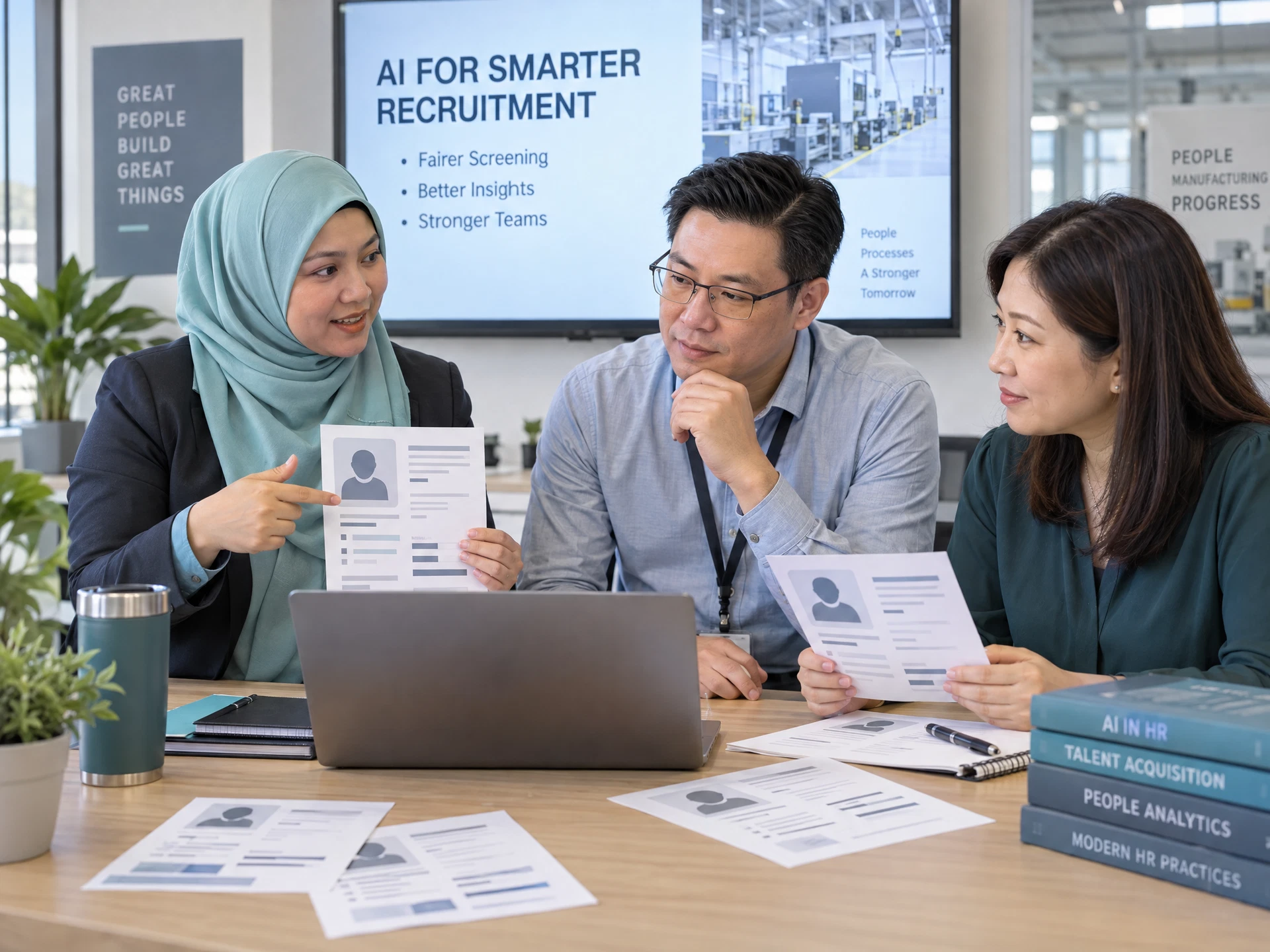
AI for HR training Malaysia can help HR teams use generative AI for carefully bounded tasks such as drafting job descriptions, structuring interview questions, organising onboarding information and summarising approved workforce records. This proposed course emphasises privacy, bias awareness, traceable source material and human approval, so AI supports HR work without making hiring, disciplinary or employment decisions.
This is a proposed training outline, not a confirmed schedule or a promise of commercial results. Use fictional or approved examples and keep decisions with the responsible people.
Learning objectives describe practice, not guaranteed business results.
Identify suitable low-risk AI assistance in recruitment, onboarding, employee communication and workforce administration while separating support tasks from decisions that require authorised HR or management judgment.
Create reviewable job descriptions, role briefs, structured interview questions and evaluation rubrics from approved requirements without inventing qualifications or screening candidates automatically.
Use AI to structure fictional onboarding checklists, internal HR messages and aggregated workforce notes while preserving source traceability, confidentiality and owner review.
Use practical checks for privacy, bias, explainability, access, version control, escalation and human approval before AI-assisted content is shared or used in an HR workflow.
Prompt → Check → Revise → Review
Use AI to support suitable tasks. Manufacturing, quality, safety and business decisions remain with the people responsible.
Course visuals are AI-created fictional scenes; people and facilities do not depict actual AIGreen Plus staff, learners or client events.
HR and a production manager use a fictional role profile to organise responsibilities, competencies and screening questions for a plant vacancy. AI produces a draft only; HR and the hiring owner verify wording, criteria and approval status before publication.
A hiring panel compares sanitised fictional candidate summaries against an approved warehouse or QA/QC rubric. The AI-assisted table highlights evidence and missing information, while authorised people conduct follow-up and make the selection decision.
An HR coordinator turns fictional onboarding notes and an approved internal announcement into a checklist and plain-language draft for a new operations team member. Policy, safety and employee-specific details are checked by the responsible owner before release.
Examples are fictional or sanitised proposals, not AIGreen Plus client case studies or verified results.
This describes AIGreen Plus's proposed approach for this course, not an independent competitor comparison or a claim that other providers lack similar content. Syllabus, tools, examples and availability should be confirmed with AIGreen Plus.
| Potential point of difference | AIGreen Plus's approach | Why it may matter to a factory |
|---|---|---|
| Manufacturing-aware HR scenarios | The proposed practice uses plant, QA/QC, warehouse, office and technical recruitment situations rather than generic HR examples alone. | Teams can connect responsible AI techniques to the role briefs, onboarding tasks and workforce records they recognise. |
| Recruitment workflow from brief to review | Modules follow a practical sequence from job analysis and prompt design through candidate evidence, interviews and approval checkpoints. | Learners can see where AI assistance fits and where HR or hiring owners must take over. |
| Privacy and fairness treated as operating controls | Exercises minimise data, expose unknowns, question biased criteria and require traceable human review instead of automatic employment decisions. | This supports safer discussion of candidate and employee information without claiming legal compliance or replacing professional judgment. |
| Small-pilot orientation | The proposed final module helps teams define a bounded use case, accountable reviewer, stop conditions and evaluation questions before wider adoption. | Organisations can scope a sensible next step while confirming their own policies, tools, approvals and operational needs. |
On small screens, scroll horizontally inside the table to compare all three columns.
Eight proposed modules are shown in a structured table for easy review. Confirm the final syllabus, depth, tools, duration and delivery format with AIGreen Plus.
On small screens, scroll horizontally inside the course outline table to see every column.
| Module | Focus | Key points | Practice exercise |
|---|---|---|---|
| 01Foundations and responsible AI for HR | Understand where generative AI may assist HR and recruitment work, where it can fail, and which employment decisions must remain with authorised people. |
| Using a fictional Malaysian factory vacancy and sanitised HR notes, classify proposed AI tasks as suitable, restricted or unsuitable, then record the human owner and review needed for each task. |
| 02Prompt design for HR workflows | Design precise prompts that define the HR task, approved context, intended audience, output format and checks required before use. |
| Rewrite a vague request for a recruitment update into a structured prompt, using a sanitised source pack and requiring the model to flag unsupported claims and unanswered questions. |
| 03Job analysis and description drafting | Use AI to organise approved role requirements into clear job descriptions for office, plant, warehouse and technical positions without creating unapproved criteria. |
| From fictional production-planner requirements and a manager's sanitised notes, draft a job description, mark every inferred phrase, and prepare questions for HR and the hiring manager to approve. |
| 04Candidate information and screening support | Structure candidate information against approved criteria while preventing automated rejection, unsupported inference or inappropriate use of personal data. |
| Compare three fictional, sanitised CV summaries against an approved warehouse-supervisor rubric, produce an evidence table with unknowns, and have a human panel decide what requires follow-up. |
| 05Structured interviews and evaluation notes | Prepare consistent interview questions and evidence-based evaluation aids that support fairer discussion without replacing panel judgment. |
| Build a fictional interview guide for a QA/QC coordinator, test whether each question is job-related and neutral, and revise a mock scorecard when evidence does not support a rating. |
| 06Onboarding and employee communication | Draft reviewable onboarding materials and internal HR communications while keeping policy, safety and role-specific requirements under authorised ownership. |
| Turn sanitised onboarding notes for a new production technician into a checklist and welcome message, then compare each item with the approved source and flag safety or policy content for owner confirmation. |
| 07Workforce records and people insights | Use AI to organise aggregated workforce information and identify questions for HR review without exposing unnecessary personal data or presenting correlations as conclusions. |
| Analyse a fictional aggregated training and headcount table for office, operations and warehouse teams, ask for neutral observations and follow-up questions, and verify every figure against the supplied table. |
| 08HR governance and pilot planning | Create a small, reviewable AI use plan with data boundaries, accountable owners, fairness checks, approval steps and evaluation questions. |
| Draft a pilot brief for AI-assisted job-description drafting, including scope, excluded data, reviewer roles, fairness questions, approval checkpoints and a plan to pause if risks are found. |
It is a proposed practical course on using AI to support HR and recruitment tasks in Malaysian organisations. It covers job descriptions, structured interviews, onboarding, workforce information and responsible review; final syllabus and availability should be confirmed with AIGreen Plus.
HR managers, recruiters, hiring managers, plant administrators, supervisors and workforce-planning staff can benefit, especially those supporting manufacturing, warehouse, QA/QC and office roles.
No. It uses AI only as bounded drafting or organising support. Authorised HR and hiring owners review evidence, challenge assumptions and make shortlist, selection and rejection decisions.
Exercises use fictional or sanitised information and teach data minimisation, access checks, source control and approval. Organisations must follow their own policies and confirm whether a tool is approved before entering personal data.
Yes, the proposed examples include production, warehouse, QA/QC, technical and office recruitment, onboarding and internal communication. Examples remain fictional or sanitised and must be adapted and approved by the organisation.
It can help structure approved role notes, draft job-description language, prepare interview questions, organise evidence and identify follow-up questions. It should not invent requirements or make employment decisions.
It covers documentation and analysis support only. HR owners should consult current official sources and authorised legal or professional advisers for employment, privacy, equality, safety or other regulated requirements.
The tool, account type and available features are proposed and may vary. Confirm current vendor access, organisational approval, data settings and delivery requirements with AIGreen Plus before the course.
Certificate arrangements and HRD Corp eligibility have not been confirmed for this proposed course. Verify current recognition, eligibility and supporting documents directly with AIGreen Plus before planning around them.
No. Duration, fees, delivery details and final syllabus are not specified here. Ask AIGreen Plus to confirm the current proposal, tools, availability and commercial terms without sharing confidential HR data.
How can a Malaysian HR team pilot AI for a manufacturing recruitment or onboarding workflow without exposing personal data or delegating employment decisions?
AI for HR training Malaysia can help HR teams use generative AI for carefully bounded tasks such as drafting job descriptions, structuring interview questions, organising onboarding information and summarising approved workforce records. This proposed course emphasises privacy, bias awareness, traceable source material and human approval, so AI supports HR work without making hiring, disciplinary or employment decisions.
A practical course proposal. Select approved tools and sample data under your organisation's policy; keep operational, safety, quality and other authorised decisions with the responsible people.

Choose low-risk HR support without delegating employment decisions.
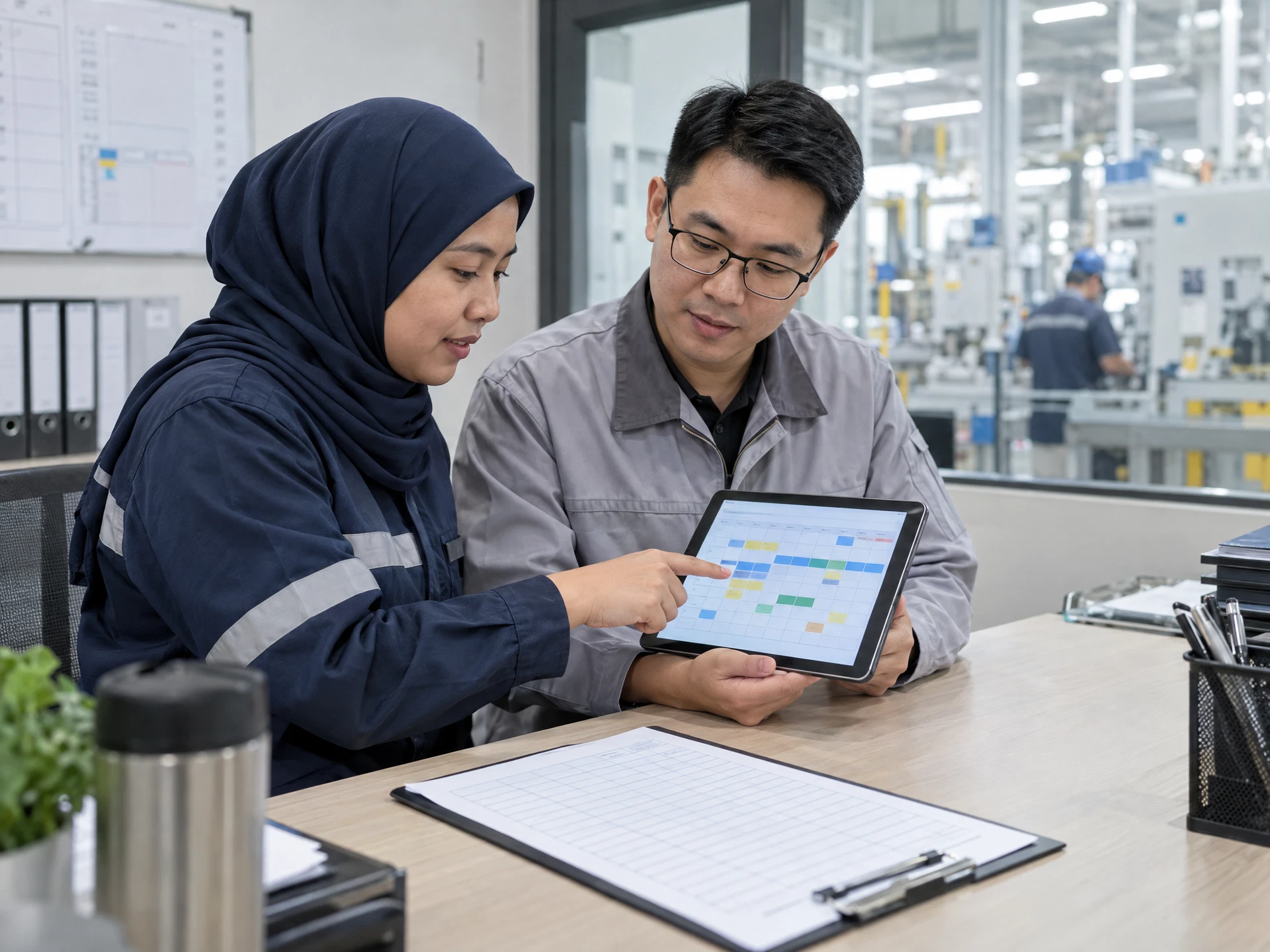
Set permitted sources, criteria, access limits and approval gates.

Create repeatable HR prompts with traceability and human checks.
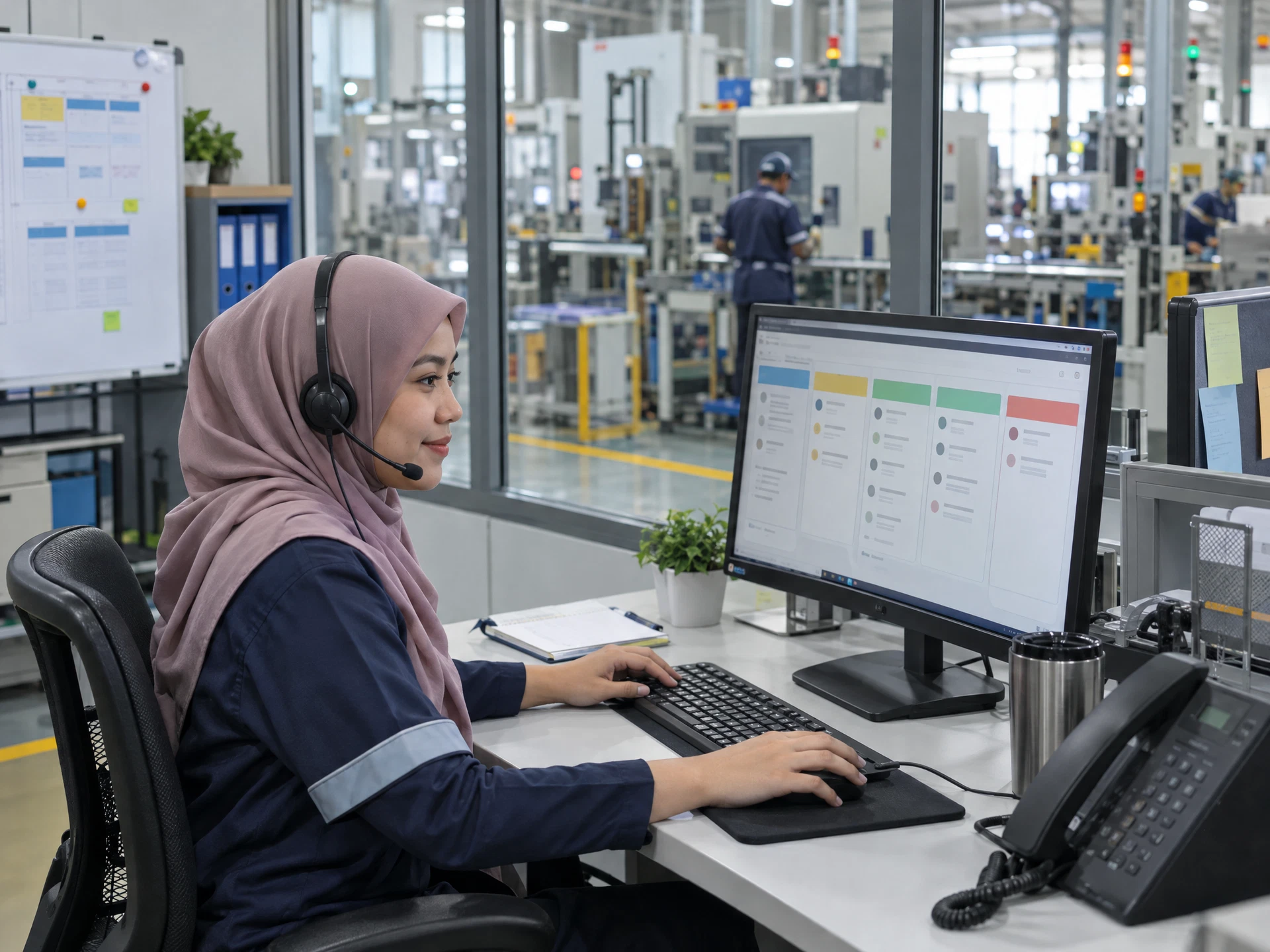
Validate evidence, fairness, privacy and safety under human authority.

Pilot narrowly, measure evidence and retain human decision authority.
Use the materials with a competent workplace owner and the appropriate approvals.
The five-stage flow uses AI-created fictional scenes; the people, equipment, interfaces and facilities are not actual AIGreen Plus staff, learners, clients or factories. Course images are category-specific examples. Pending assets are labelled in progress; unavailable artwork is suppressed rather than replaced with unrelated imagery.
Share the course title, participant roles and learning priorities. AIGreen Plus will confirm syllabus, tools, availability, delivery language, format and quotation.
Do not send confidential production data, account details or personal information in an enquiry.
