


Map safe AI support opportunities
Identify low-risk documentation and analysis tasks in HACCP workflows, define source boundaries and distinguish drafting support from regulated or professional judgement.
This proposed course shows Malaysian manufacturing teams how AI can support clearer HACCP documentation, food safety records and traceability reviews. Learners practise with fictional or sanitised examples while authorised food-safety owners verify every conclusion against current approved procedures and official sources. If agreed in scope, examples may include organising FSSC 22000 scheme-related records; check current official scheme documents with the authorised food-safety owner. This is not a scheme conformity or certification assessment.
Proposed course outline; tools, dates, format, duration and fees must be confirmed with AIGreen Plus.
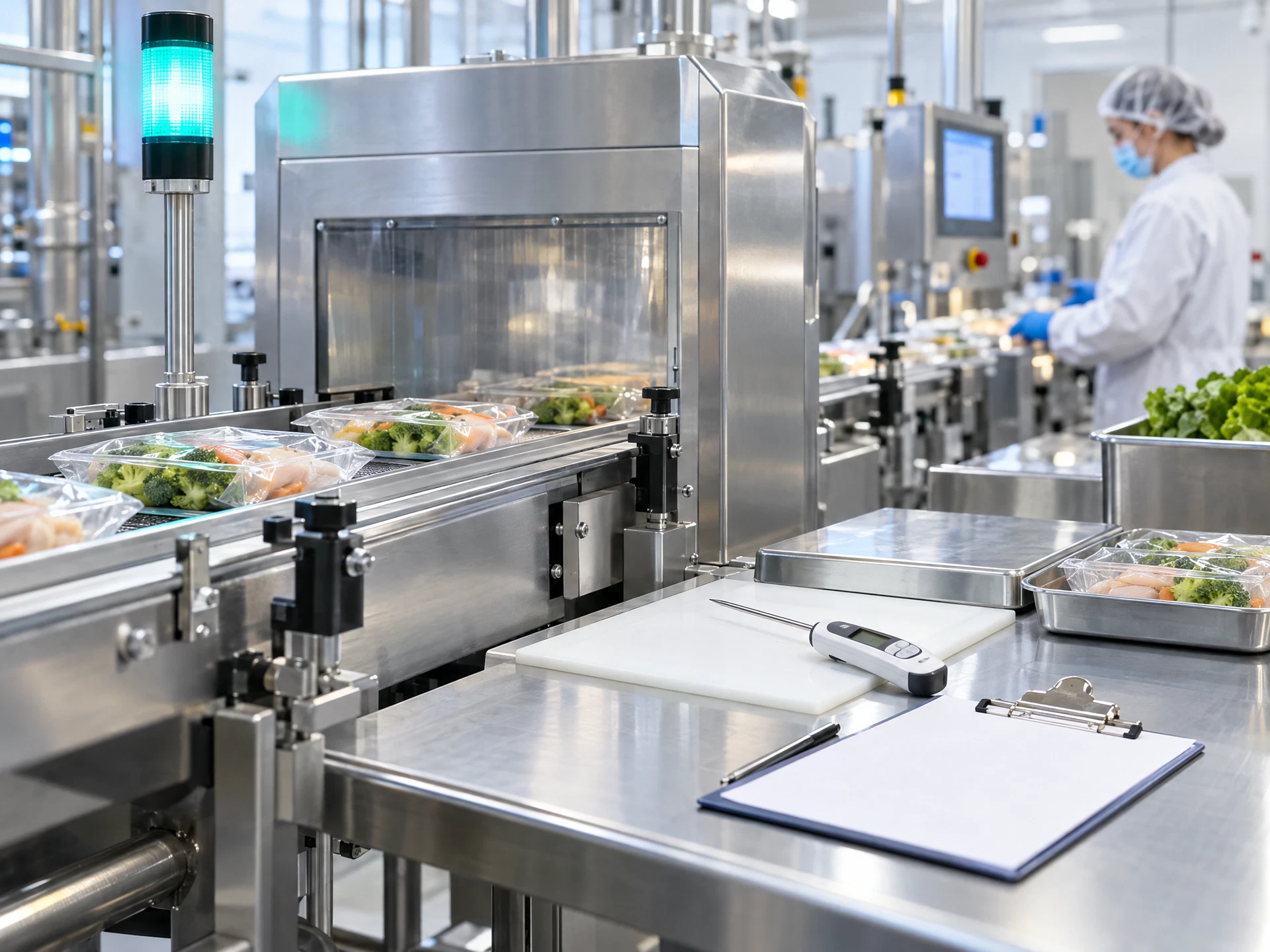
AI food safety training Malaysia can help manufacturing teams organise HACCP records, hazard-analysis notes, monitoring logs, deviations and verification evidence. If agreed in scope, examples may include FSSC 22000 scheme-related documentation. AI remains documentation and analysis support; authorised food-safety professionals retain hazard, critical-control-point, release and compliance decisions. Verify current official scheme requirements and course scope with the HACCP team and AIGreen Plus.
This is a proposed training outline, not a confirmed schedule or a promise of commercial results. Use fictional or approved examples and keep decisions with the responsible people.
Learning objectives describe practice, not guaranteed business results.
Identify low-risk documentation and analysis tasks in HACCP workflows, define source boundaries and distinguish drafting support from regulated or professional judgement.
Organise fictional hazard-analysis inputs, control-point notes, monitoring evidence and open questions into reviewable drafts without inventing facts or decisions.
Use structured prompts to assemble mock receiving, supplier, warehouse, deviation and corrective-action information while keeping quantities, lots, owners and evidence traceable.
Create a practical review trail covering approved sources, assumptions, version control, privacy, escalation and sign-off before any AI-assisted record is used.
Prompt → Check → Revise → Review
Use AI to support suitable tasks. Manufacturing, quality, safety and business decisions remain with the people responsible.
Course visuals are AI-created fictional scenes; people and facilities do not depict actual AIGreen Plus staff, learners or client events.
A QA/QC team uses a sanitised process flow, hazard table and prerequisite records to ask AI for missing-evidence questions. The HACCP team checks the source line by line and decides whether any change is appropriate.
A production supervisor organises fictional monitoring readings, a deviation note and follow-up actions into a review pack. An authorised food-safety owner verifies limits, timestamps, containment and disposition rather than accepting generated conclusions.
Procurement and warehouse staff compare a mock supplier delivery, receiving record and lot register with AI-assisted sorting. They flag discrepancies for investigation and keep release, traceability and supplier decisions with responsible personnel.
Examples are fictional or sanitised proposals, not AIGreen Plus client case studies or verified results.
These points describe AIGreen Plus's proposed approach for this course, not an independent competitor comparison or a claim that other providers do not offer similar content. Confirm the syllabus, tools, delivery scope and availability with AIGreen Plus.
| Potential point of difference | AIGreen Plus's approach | Why it may matter to a factory |
|---|---|---|
| HACCP documentation before automation | The proposed learning sequence starts with source quality, record structure and review boundaries before introducing AI-assisted drafting. | Teams can focus on safer documentation support without treating generated text as a replacement for food-safety controls. |
| Role-based manufacturing examples | Exercises connect QA/QC, production, sanitation, warehouse, procurement and document-control tasks using fictional or sanitised Malaysian manufacturing scenarios. | Participants can discuss how a proposed workflow might fit their own owners and records while keeping live sensitive data out of practice. |
| Evidence and approval trail | Each activity asks learners to trace statements to supplied records, identify uncertainty and route decisions to an authorised owner. | The approach supports reviewable drafts and clearer escalation rather than unattended food-safety decisions. |
| Compliance-aware boundaries | The proposed syllabus treats AI as documentation and analysis support and directs learners to current official sources, approved procedures and qualified owners. | Organisations can examine responsible use without a claim of compliance, certification or replacement of professional or regulated judgement. |
On small screens, scroll horizontally inside the table to compare all three columns.
Eight proposed modules are shown in a structured table for easy review. Confirm the final syllabus, depth, tools, duration and delivery format with AIGreen Plus.
On small screens, scroll horizontally inside the course outline table to see every column.
| Module | Focus | Key points | Practice exercise |
|---|---|---|---|
| 01Food safety documentation foundations and AI boundaries | Understand where AI may assist HACCP documentation and where authorised food-safety judgement must remain with people. |
| Review a fictional food-safety incident note and label source facts, assumptions, missing evidence and decisions that require the HACCP team or another authorised owner. |
| 02HACCP prerequisites and source mapping | Prepare reliable source material from prerequisite programmes and approved procedures before asking AI to organise documentation. |
| Using sanitised fictional prerequisite-programme excerpts, build a source map that links each proposed summary statement to its record owner and flags gaps for confirmation. |
| 03Hazard analysis and CCP decision support | Use AI to structure hazard-analysis discussions without allowing it to determine hazards, critical limits or CCPs. |
| Give learners a fictional process flow and sanitised hazard notes; have them generate a comparison table, then annotate every hazard, control and CCP-related conclusion that requires authorised review. |
| 04Monitoring records, deviations and corrective actions | Create reviewable drafts from monitoring results and deviations while preserving the original evidence and decision trail. |
| Structure a fictional CCP monitoring exception into facts, missing checks, containment questions and proposed follow-up fields, then compare every value with the supplied log. |
| 05Verification, validation and audit evidence | Support the organisation of verification activities and evidence packs without claiming that generated content proves control effectiveness or compliance. |
| From a fictional internal-review folder, ask AI to propose an evidence index; participants check each link, remove unsupported conclusions and prepare questions for the verification owner. |
| 06Supplier, warehouse and traceability documentation | Make supplier, receiving, storage and lot-traceability records easier to reconcile while retaining operational controls. |
| Reconcile a fictional supplier delivery, warehouse receipt and traceability register, then produce an exception list with each discrepancy tied to the original record. |
| 07Controlled HACCP documents and change review | Draft clearer document updates while protecting version control, approval routes and the integrity of controlled food-safety procedures. |
| Use a fictional SOP revision and HACCP-form change request to create a redline-style review checklist, then identify edits that must be approved by the document and food-safety owners. |
| 08Governance, review and a safe pilot plan | Turn the learning into a small, reviewable AI-support pilot with safeguards, measures and clear accountability. |
| Draft a fictional pilot brief for organising HACCP evidence, including scope, data safeguards, human approvals, exception handling and evaluation questions without promising savings or compliance outcomes. |
It is a proposed course on using AI to organise and draft food-safety documentation, including HACCP records, hazard-analysis notes, monitoring logs, deviations and traceability evidence. Human verification and authorised approval remain mandatory.
It is intended for Malaysian manufacturing food-safety, QA/QC, production, sanitation, warehouse, procurement and document-control teams. Examples are adapted to business workflows but use fictional or sanitised information.
AI can help structure a draft or identify questions, but it must not independently create, approve or change a HACCP plan. The HACCP team and other authorised owners must verify hazards, controls, critical limits and approvals.
It teaches how to organise inputs and surface review questions around hazards and CCPs. It does not delegate significance, critical-limit, validation, release or corrective-action decisions to AI.
Proposed exercises use sanitised examples such as prerequisite-programme records, process flows, monitoring logs, deviation notes, supplier documents, receiving records and traceability registers. Do not use live restricted records unless explicitly approved.
If agreed in scope, the course may use current FSSC 22000 scheme documents as references for organising food-safety records. HACCP documentation support is not a scheme conformity assessment. Check current official scheme requirements with the authorised food-safety owner; no certification, compliance or audit-readiness conclusion is provided.
No particular vendor access is guaranteed in this proposed record. Tools, features, account requirements and organisational approval can change; confirm the current setup and permitted data use with AIGreen Plus and the organisation.
Basic familiarity with food-safety procedures, HACCP terminology and workplace documents is useful. Participants should also have sanitised example records and a named owner who can review any food-safety interpretation.
This proposed outline does not promise certification, HRD Corp eligibility or compliance status. Confirm any certificate, recognition or eligibility directly with AIGreen Plus and the relevant authority before relying on it.
Share the participant roles, intended HACCP documentation task and data-safety constraints with AIGreen Plus, without sending confidential factory information. Confirm the syllabus, tools, availability, delivery details and commercial terms before planning delivery.
How can a Malaysian food-manufacturing team pilot AI for HACCP documentation without letting it make food-safety decisions?
Use fictional or sanitised prerequisite, hazard-analysis, monitoring, deviation, supplier, warehouse and traceability records to test a narrowly scoped drafting or reconciliation task. An authorised HACCP team must check sources, limits, timestamps, lots, corrective actions and current official requirements; people retain hazard, CCP, release, disposition and compliance decisions.
A practical course proposal. Select approved tools and sample data under your organisation's policy; keep operational, safety, quality and other authorised decisions with the responsible people.

Select bounded documentation support while retaining human decisions.

Map approved evidence to owners and approval boundaries.
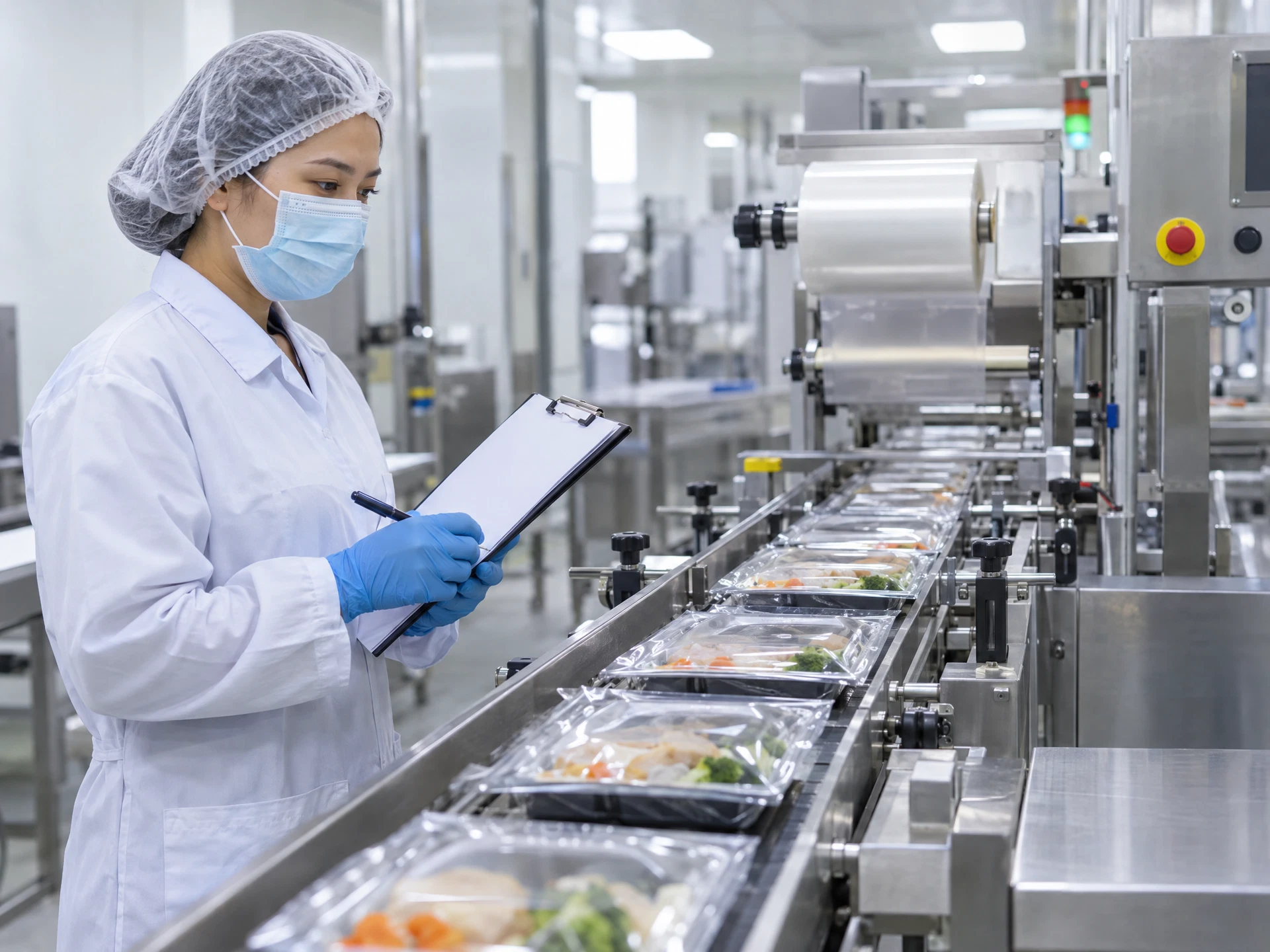
Configure reviewable drafting that preserves evidence without conclusions.

Verify example outputs against evidence and approved procedures.
Measure pilot quality and effort before deciding next steps.
Use the materials with a competent workplace owner and the appropriate approvals.
The five-stage flow uses AI-created fictional scenes; the people, equipment, interfaces and facilities are not actual AIGreen Plus staff, learners, clients or factories. Course images are category-specific examples. Pending assets are labelled in progress; unavailable artwork is suppressed rather than replaced with unrelated imagery.
Share the course title, participant roles and learning priorities. AIGreen Plus will confirm syllabus, tools, availability, delivery language, format and quotation.
Do not send confidential production data, account details or personal information in an enquiry.
