


Frame an energy-management use case
Define a focused question, relevant energy and production context, intended users, decision boundaries and evidence needed before asking AI to assist.
AI energy management training Malaysia is a proposed practical course for manufacturing and business teams that want to examine energy data, identify efficiency opportunities and organise responsible follow-up. Participants use fictional or sanitised utility, production and equipment information, with human verification and approval throughout.
Proposed course outline; tools, dates, format, duration and fees must be confirmed with AIGreen Plus.

This proposed course shows Malaysian manufacturing teams how AI can support energy-management work: structure meter and utility data, compare energy use with production context, flag patterns for investigation and prepare reviewable action briefs. It does not make autonomous operational, safety, ESG or compliance decisions; authorised people verify evidence, approve actions and confirm the syllabus and tools with AIGreen Plus.
This is a proposed training outline, not a confirmed schedule or a promise of commercial results. Use fictional or approved examples and keep decisions with the responsible people.
Learning objectives describe practice, not guaranteed business results.
Define a focused question, relevant energy and production context, intended users, decision boundaries and evidence needed before asking AI to assist.
Organise fictional or sanitised utility, meter, operating-hour and output records while checking units, time periods, missing values and source provenance.
Use AI-assisted analysis to surface patterns, anomalies and candidate actions, then rank follow-up by evidence, operational relevance and responsible ownership rather than treating suggestions as findings.
Create a small pilot brief, review checklist and traceable action summary that keep engineering, safety, ESG/GHG and compliance judgments with authorised owners.
Prompt → Check → Revise → Review
Use AI to support suitable tasks. Manufacturing, quality, safety and business decisions remain with the people responsible.
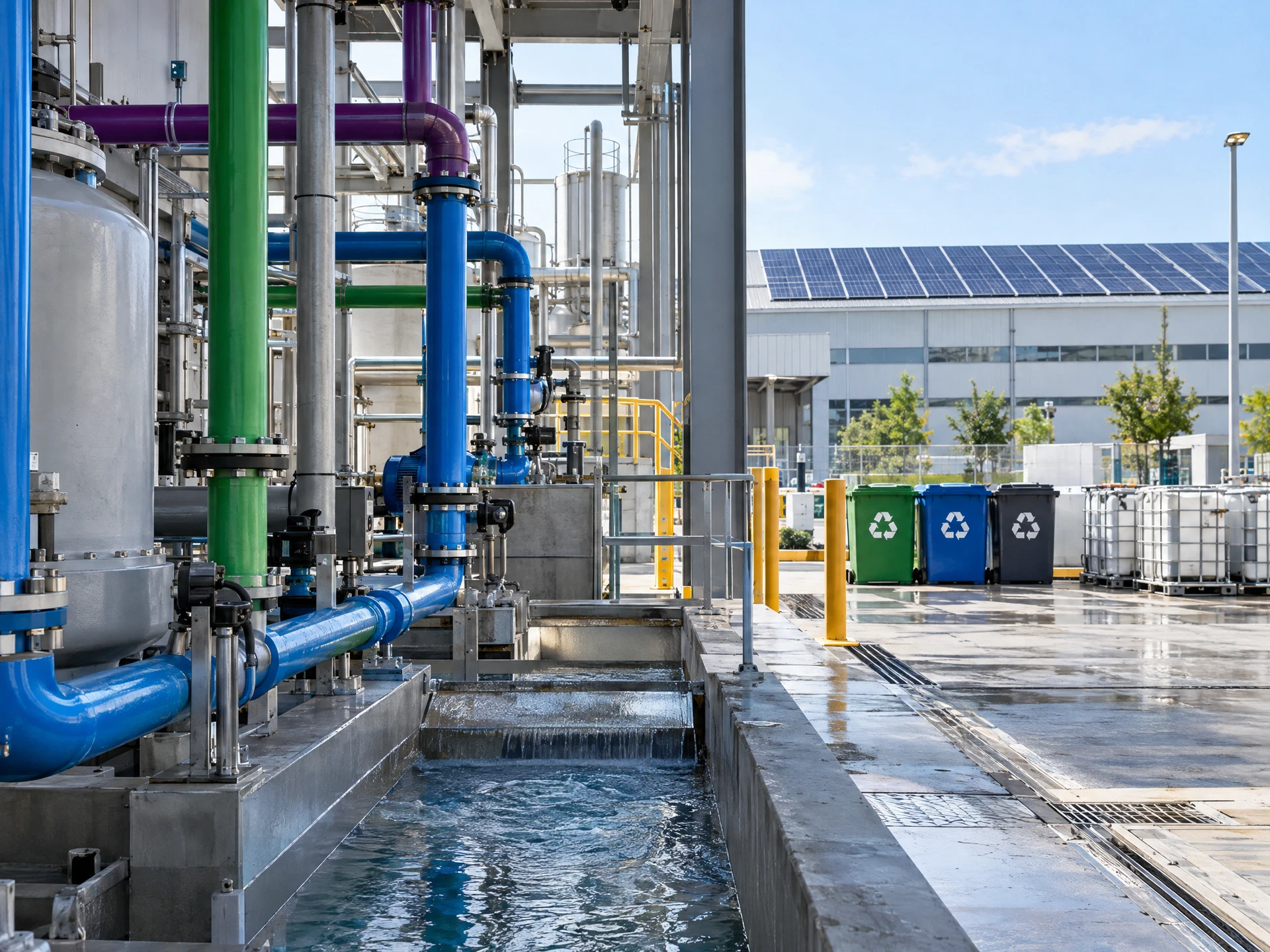
Course visuals are AI-created fictional scenes; people and facilities do not depict actual AIGreen Plus staff, learners or client events.
A production team uses a fictional weekly electricity profile, shift roster and output summary to ask AI for a structured comparison and investigation questions. The energy or operations owner checks units, timestamps and process context before approving any follow-up.
Engineering and facilities staff work from sanitised observations about compressor runtime, pressure notes and HVAC schedules. AI helps organise possible causes and checks; authorised personnel decide what to inspect, isolate, adjust or escalate.
A sustainability coordinator uses fictional utility and activity records to draft a source list, assumptions log and questions for an internal energy or GHG review. AI supports documentation and analysis only; current official sources and authorised owners verify any ESG or GHG statement.
Examples are fictional or sanitised proposals, not AIGreen Plus client case studies or verified results.
This is AIGreen Plus's proposed approach for this catalogue course, not an independent competitor comparison or a claim that other providers lack similar content. Confirm the final syllabus, tools, delivery arrangements and availability with AIGreen Plus before planning delivery.
| Potential point of difference | AIGreen Plus's approach | Why it may matter to a factory |
|---|---|---|
| Energy analysis tied to factory work | The proposed learning path connects utility and meter records with shifts, production context, facilities, maintenance and sustainability roles. | Teams can practise on familiar Malaysian manufacturing questions rather than treating energy data as an isolated spreadsheet topic. |
| Evidence before recommendation | Exercises distinguish source records, assumptions, anomalies, investigation questions and approved actions, with traceable review points. | Learners can challenge unsupported explanations and give engineering or operations owners a clearer basis for follow-up. |
| Cross-functional ownership | The proposed course includes operations, engineering, maintenance, facilities, procurement, finance, QA/QC and sustainability perspectives where relevant. | A pilot can be scoped around real responsibilities while keeping safety, ESG/GHG and compliance judgments with authorised people. |
| Bounded adoption planning | The final module uses a small, reviewable pilot with data safeguards, approval roles, stop conditions and evaluation questions rather than promised results. | Organisations can confirm fit, current vendor access and governance requirements before expanding an AI-assisted energy workflow. |
On small screens, scroll horizontally inside the table to compare all three columns.
Eight proposed modules are shown in a structured table for easy review. Confirm the final syllabus, depth, tools, duration and delivery format with AIGreen Plus.
On small screens, scroll horizontally inside the course outline table to see every column.
| Module | Focus | Key points | Practice exercise |
|---|---|---|---|
| 01Energy management foundations and responsible AI use | Establish how AI may support energy analysis without replacing engineering judgment, operational controls or authorised sustainability decisions. |
| Review a fictional Malaysian factory energy brief and label each statement as source fact, assumption, AI suggestion or owner approval point before drafting a safe analysis request. |
| 02Map energy sources, meters and operating context | Build a practical map of electricity, fuel, process loads, facilities and production context so an AI request has a defined scope. |
| Using a sanitised site map and sample utility records, create an energy-data inventory that links each field to its owner, period, unit and intended analysis question. |
| 03Clean and normalise energy data | Prepare consistent datasets for analysis while making data-quality limitations visible instead of allowing AI to hide them. |
| Clean a fictional hourly electricity and production table, document three data-quality issues, and produce a review note that distinguishes corrected values from unresolved gaps. |
| 04Read load profiles and identify anomalies | Use AI-assisted pattern finding to highlight peaks, baseload changes and unusual periods for human investigation. |
| Analyse a fictional weekly load profile with production notes, ask for investigation questions, then verify each flagged peak or dip against the supplied timeline. |
| 05Prioritise efficiency opportunities | Turn evidence-based observations into a structured opportunity register for engineering and operations review. |
| From a sanitised opportunity list covering compressed air, lighting and process scheduling, create a review matrix with evidence, questions, owner and next-check fields. |
| 06Support energy-aware operations and maintenance | Explore how AI can organise operational questions around schedules, equipment condition and maintenance records without controlling equipment or replacing competent review. |
| Use fictional compressed-air and HVAC observations to draft separate operations and maintenance follow-up lists, then mark which checks require engineering or safety approval. |
| 07Measure actions and support GHG documentation | Design a traceable review approach for interventions and sustainability records while treating AI as documentation and analysis support only. |
| Prepare a fictional pre-and-post intervention evidence checklist, identify missing verification items, and draft questions for the responsible energy or GHG owner without claiming a result. |
| 08Factory energy pilot review and improvement plan | Create a bounded AI pilot that can be reviewed, approved and improved before any wider workplace adoption. |
| Draft a pilot brief for a fictional plant energy-review workflow with safeguards, success questions, human approvers, stop conditions and a next-review date to be confirmed by the organisation. |
It is a proposed course on mapping energy data, cleaning and normalising records, reading load patterns, prioritising efficiency investigations, supporting operations and maintenance questions, documenting energy or GHG evidence, and planning a governed AI pilot. Final syllabus and scope should be confirmed with AIGreen Plus.
It is intended for Malaysian manufacturing and business teams involved in energy, facilities, engineering, operations, maintenance, sustainability, ESG/GHG, procurement, finance or related documentation and review.
Useful examples include sanitised utility bills, meter readings, operating hours, shift information, production context and equipment notes. Participants should not bring live confidential or restricted data unless organisational approval explicitly permits it.
AI can help organise records, surface patterns and suggest investigation questions, but it cannot establish a cause from limited data or authorise an intervention. Engineering, operations and other responsible owners must verify evidence and decide next steps.
Yes, proposed exercises use fictional or sanitised examples involving compressed air, HVAC, idle periods, changeovers and production context. The examples support analysis and follow-up planning, not automatic equipment control or a guaranteed efficiency result.
No. AI is framed as documentation and analysis support only. Current official sources, organisational procedures and authorised energy, ESG, GHG, safety or compliance owners must verify records and make regulated or professional judgments.
No particular vendor or account is promised in this draft. Any AI, spreadsheet, meter, BMS or energy-management platform should be checked for current features, access, data handling and organisational approval before use; confirm arrangements with AIGreen Plus.
No. It teaches a responsible method for finding and reviewing opportunities; it does not promise savings, payback, rankings or business outcomes. Any result requires valid data, approved action, implementation and independent organisational evaluation.
Exercises use fictional or sanitised information. Participants check units, dates, sources, assumptions and calculations, record uncertainties and obtain human approval before sharing or acting on an AI-assisted draft.
Duration, fees, delivery format, tools and availability are not specified in this proposed record. Ask AIGreen Plus to confirm the current syllabus, participant requirements, account arrangements and quotation before planning the course.
How can a Malaysian manufacturing team use AI for energy management without handing over operational or sustainability decisions?
Use fictional or sanitised meter, utility, operating-hour and output records to structure comparisons, flag patterns and draft review notes. Competent engineering, operations, safety and ESG/GHG owners verify evidence and approve any follow-up; the workflow does not give AI control of equipment or authorised sustainability, compliance or release decisions.
A practical course proposal. Select approved tools and sample data under your organisation's policy; keep operational, safety, quality and other authorised decisions with the responsible people.

Choose a bounded energy question with human oversight.

Define permitted data, reviewers and approval boundaries.

Prepare repeatable analysis with visible assumptions and provenance.

Verify patterns while retaining human engineering and safety authority.
Pilot the workflow and document an authorised decision.
Use the materials with a competent workplace owner and the appropriate approvals.
The five-stage flow uses AI-created fictional scenes; the people, equipment, interfaces and facilities are not actual AIGreen Plus staff, learners, clients or factories. Course images are category-specific examples. Pending assets are labelled in progress; unavailable artwork is suppressed rather than replaced with unrelated imagery.
Share the course title, participant roles and learning priorities. AIGreen Plus will confirm syllabus, tools, availability, delivery language, format and quotation.
Do not send confidential production data, account details or personal information in an enquiry.
