


Frame research around a decision
Turn a broad business issue into a bounded research brief with a clear question, audience, scope, assumptions and accountable decision owner.
Learn how to use an approved AI assistant to turn structured, fictional or sanitised research inputs into traceable summaries and decision options for Malaysian manufacturing and office teams. This proposed course covers question framing, evidence checks, comparative analysis and human review for operations, procurement, QA/QC and sustainability work.
Proposed course outline; tools, dates, format, duration and fees must be confirmed with AIGreen Plus.
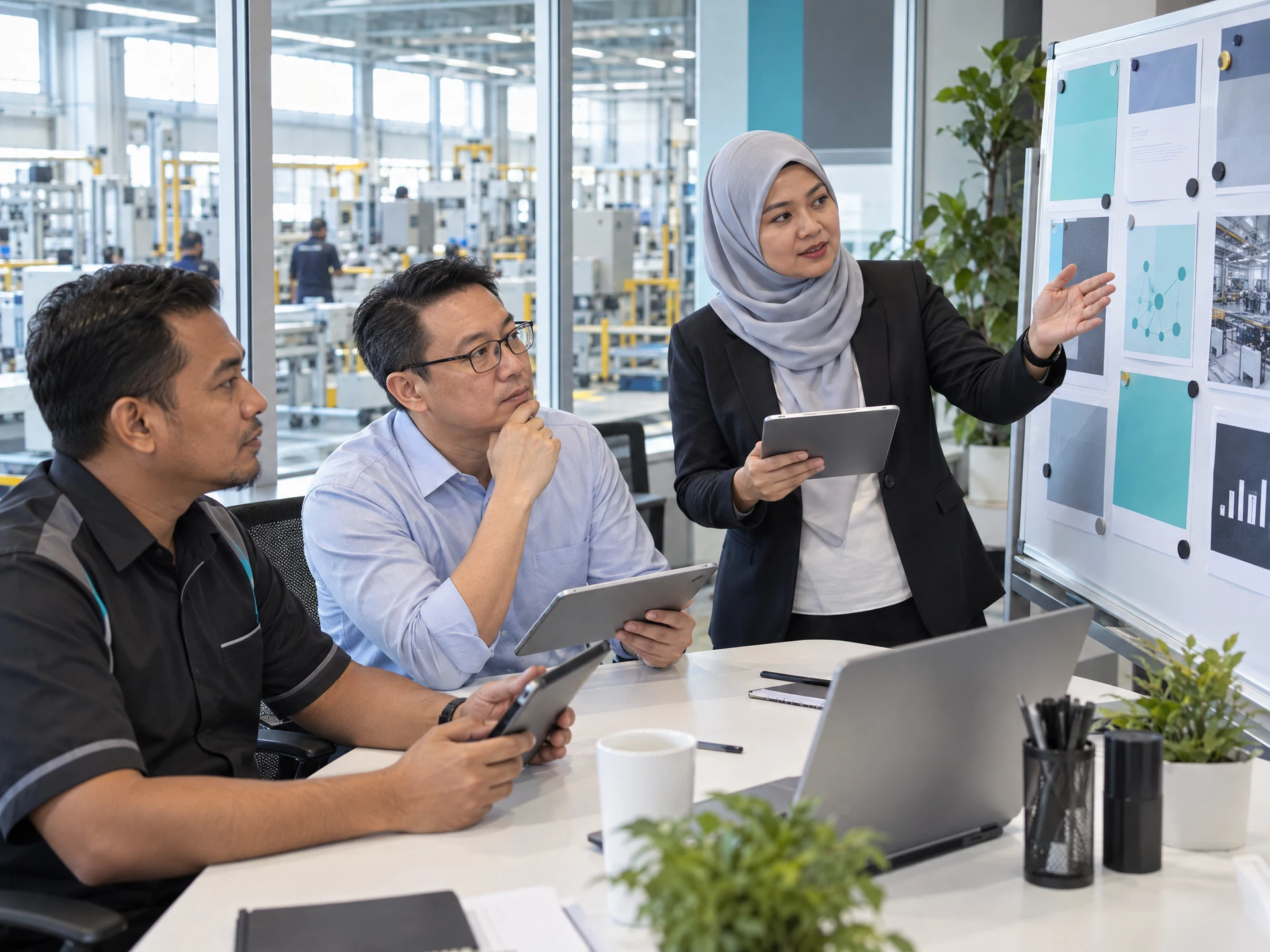
AI for Research, Summarisation and Decision-Making is a proposed AI research training course for Malaysian manufacturing and business teams. It teaches participants to frame research questions, organise approved sources, produce audience-ready summaries, test uncertainty and build reviewable decision briefs. AI remains documentation and analysis support; authorised people verify evidence, approve recommendations and make operational, quality, safety or commercial decisions.
This is a proposed training outline, not a confirmed schedule or a promise of commercial results. Use fictional or approved examples and keep decisions with the responsible people.
Learning objectives describe practice, not guaranteed business results.
Turn a broad business issue into a bounded research brief with a clear question, audience, scope, assumptions and accountable decision owner.
Organise supplied material into concise summaries that preserve source meaning, figures, caveats, uncertainty and unresolved questions for different Malaysian workplace audiences.
Build reviewable option matrices and scenario notes using agreed criteria while separating evidence, inference, trade-offs and information that still needs confirmation.
Use source logs, data boundaries, reviewer roles and approval steps so AI-assisted research supports decisions without replacing authorised operational, quality, safety or commercial judgement.
Prompt → Check → Revise → Review
Use AI to support suitable tasks. Manufacturing, quality, safety and business decisions remain with the people responsible.
Course visuals are AI-created fictional scenes; people and facilities do not depict actual AIGreen Plus staff, learners or client events.
A procurement team uses fictional supplier notes, lead-time assumptions and packaging requirements to build a source log and options matrix. The AI helps structure the comparison, while procurement and operations verify current terms, constraints and the final recommendation.
A QA/QC team supplies a sanitised set of inspection observations and historical trend notes for a neutral research summary. Participants identify evidence gaps and draft follow-up questions; authorised quality personnel retain investigation, acceptance and release decisions.
A warehouse and planning team turns a fictional stock-profile and space-constraint case into a manager summary, scenario comparison and action brief. Every quantity, location and assumption is checked against the mock records before an owner approves any next step.
Examples are fictional or sanitised proposals, not AIGreen Plus client case studies or verified results.
These rows describe AIGreen Plus's proposed approach for this course, not an independent comparison with competitors or a claim that other providers do not offer similar content. Confirm the syllabus, tools, delivery and availability with AIGreen Plus.
| Potential point of difference | AIGreen Plus's approach | Why it may matter to a factory |
|---|---|---|
| Decision-first research practice | The proposed course starts with the decision owner, research boundary and evidence requirement before introducing AI-assisted drafting. | Teams can keep research focused on a real operational or business question instead of producing summaries with no agreed use. |
| Manufacturing-grounded exercises | Exercises use fictional or sanitised cases across production, procurement, QA/QC, warehouse and planning workflows. | Participants can connect research and summarisation methods to familiar Malaysian factory and office-team work without exposing live records. |
| Evidence and review habits | The proposed method separates source content, inference and uncertainty, with source logs and human approval built into each practice. | Managers and accountable specialists receive clearer drafts while retaining control of quality, safety, commercial and operational judgement. |
| Briefs for mixed audiences | Learners practise reshaping the same checked evidence for executives, operations staff and functional reviewers, including assumptions and open questions. | Cross-functional teams can discuss options using a shared evidence base rather than relying on an opaque AI recommendation. |
On small screens, scroll horizontally inside the table to compare all three columns.
Eight proposed modules are shown in a structured table for easy review. Confirm the final syllabus, depth, tools, duration and delivery format with AIGreen Plus.
On small screens, scroll horizontally inside the course outline table to see every column.
| Module | Focus | Key points | Practice exercise |
|---|---|---|---|
| 01Define the Research Question and Decision | Translate a broad business issue into a bounded research question, decision owner, scope and useful output. |
| From a fictional Malaysian factory scrap-rate concern, write a research brief naming the decision owner, scope, evidence needed and questions the AI must not answer. |
| 02Plan Sources and Search Pathways | Build a practical source plan that distinguishes official, internal, expert and secondary material before asking AI to summarise. |
| Create a source-triage table for a fictitious procurement question about packaging suppliers, marking which items require confirmation from approved records or current official sources. |
| 03Extract Evidence into a Structured Research Note | Use AI to organise supplied material without silently filling gaps or blending unrelated evidence. |
| Provide three sanitised mock documents about warehouse picking errors and produce an evidence note with claim, source reference, uncertainty and follow-up-question columns. |
| 04Summarise for Different Business Audiences | Turn verified notes into concise summaries for managers, operations, QA/QC and office teams while preserving nuance. |
| Rewrite a fictional maintenance-research note as a one-paragraph manager brief and a detailed operations handover, then compare omissions and verify every number. |
| 05Check Facts, Uncertainty and Bias | Review AI-assisted research for unsupported claims, skewed framing, ambiguity and false confidence before circulation. |
| Audit a deliberately flawed AI summary of a mock QA/QC trend, highlight invented causes and missing context, and prepare reviewer questions without deciding product disposition. |
| 06Compare Options and Trade-Offs | Structure alternative courses of action using agreed criteria instead of asking AI to choose on behalf of the organisation. |
| Build a fictional packaging-change options matrix for procurement and operations, mark evidence gaps and leave the recommendation field for the authorised team. |
| 07Draft Decision Briefs and Scenarios | Convert checked evidence into a transparent brief that explains options, assumptions, risks and next steps. |
| Use a sanitised production-capacity case to draft a one-page decision brief with three scenarios, assumptions, open questions and an approval section. |
| 08Governance, Reuse and Pilot Review | Design a repeatable workflow for safe AI-assisted research and a small pilot with practical review checks. |
| Draft a pilot plan for weekly operations research summaries, including approved inputs, reviewer sign-off, exception handling and evaluation questions. |
This proposed course teaches Malaysian teams to frame research questions, organise approved sources, extract evidence, write useful summaries and prepare reviewable decision briefs with human verification.
An approved AI assistant can help structure supplied notes, identify themes, compare formats and draft audience-specific summaries. Participants must check the source material and correct omissions, invented details and misleading interpretations.
Yes, the fictional exercises cover production capacity, procurement, QA/QC, warehouse and planning questions. AI supports documentation and analysis only; authorised managers and specialists make the operational, quality, safety and commercial decisions.
Learners create a source log and check relevance, authority, dates, definitions and gaps. AI may organise supplied references, but completeness and citation format depend on the approved workflow and must be confirmed against current official or internal sources.
No. The course uses AI to structure criteria, scenarios and trade-offs. The decision owner sets priorities, verifies evidence, considers risks and approves any recommendation; the course does not promise a particular outcome.
Exercises use fictional or sanitised information. Do not enter confidential, personal, customer, proprietary or restricted factory data unless the organisation has explicitly approved that use and the relevant policy allows it.
Yes. The proposed examples include supplier comparisons, QA/QC trend review and warehouse capacity analysis, with role-specific checks so participants do not treat a generated summary as a release, stock or purchasing decision.
The syllabus assumes an organisation-approved AI assistant, but specific tools, features, account access and vendor terms are not promised. Confirm current vendor access, organisational approval and availability with AIGreen Plus before delivery.
No. This is proposed course content. Ask AIGreen Plus to confirm the current syllabus, tools, delivery format, language, availability and any organisation-specific adjustments before planning participation.
They are not specified in this record. Confirm duration, fees, certificate arrangements and any current HRD Corp eligibility directly with AIGreen Plus; no certification or eligibility is implied here.
How can a Malaysian manufacturing or office team pilot AI-assisted research without handing a decision to AI?
Start with a fictional or sanitised, low-risk research case. Define the decision question, approved sources, data exclusions, reviewer and approval boundaries; use a structured source log, evidence note, option matrix and decision brief. A competent functional reviewer verifies facts and uncertainty, while authorised people retain operational, quality, safety, release and commercial decisions.
A practical course proposal. Select approved tools and sample data under your organisation's policy; keep operational, safety, quality and other authorised decisions with the responsible people.

Choose bounded research with human-controlled decisions and low-risk inputs.

Set traceable source boundaries, data exclusions and approval roles.

Configure source extraction, uncertainty labelling and decision-ready summaries.
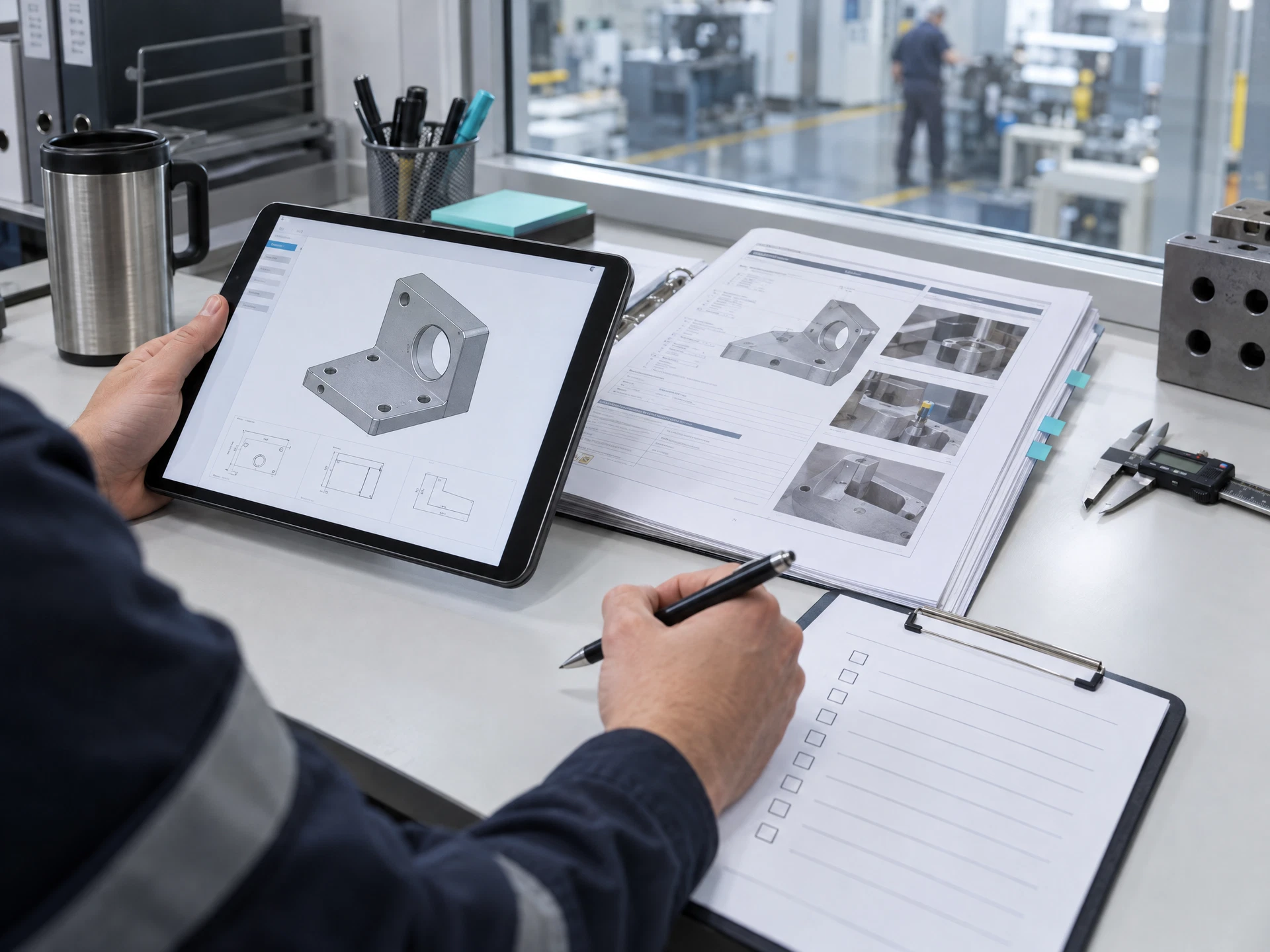
Test outputs with competent reviewers before circulation or action.

Measure pilot outcomes and decide whether to proceed.
Use the materials with a competent workplace owner and the appropriate approvals.
The five-stage flow uses AI-created fictional scenes; the people, equipment, interfaces and facilities are not actual AIGreen Plus staff, learners, clients or factories. Course images are category-specific examples. Pending assets are labelled in progress; unavailable artwork is suppressed rather than replaced with unrelated imagery.
Share the course title, participant roles and learning priorities. AIGreen Plus will confirm syllabus, tools, availability, delivery language, format and quotation.
Do not send confidential production data, account details or personal information in an enquiry.
