


LIFE CYCLE ASSESSMENT & PRODUCT SUSTAINABILITY
Environmental Product Declaration (EPD)
Turn product evidence into a reviewable EPD pathway. Keep assumptions visible and decisions accountable.
AIGreen Plus helps Malaysian manufacturers scope a product EPD, identify the applicable Product Category Rules, organise life-cycle evidence and prepare a review pack. The work is a proposed consultancy engagement: external verification, programme registration and any final declaration remain separate decisions.
Human review retainedCurrent-source check is conditionalFictional dashboard concept
See the review dashboard ↓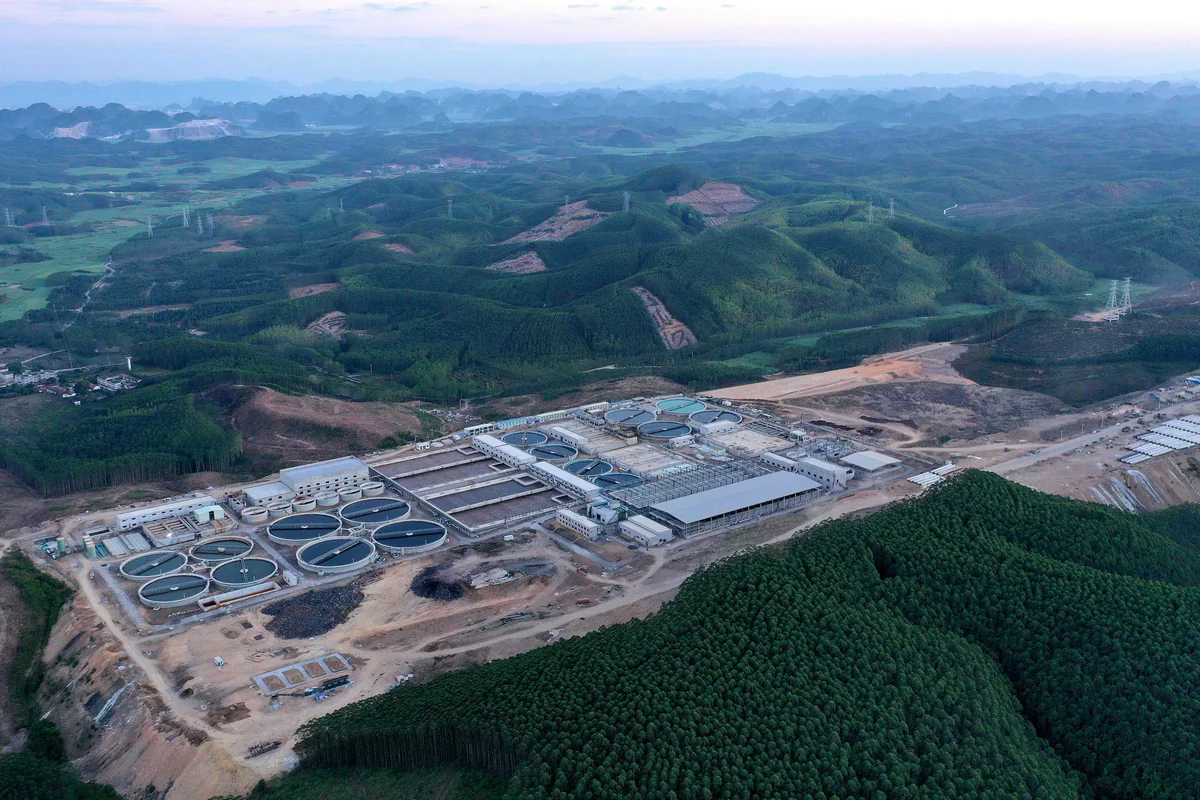
Photo by Heming paper (@hemingpaper) · Source: source page · Licence: Unsplash License · Resized proportionally and converted to WebP; original content retained. Displayed in a landscape frame.
An EPD is a structured environmental declaration for a defined product and life-cycle scope. We help a manufacturer select a suitable PCR, map data owners, check activity and bill-of-material evidence, document assumptions, and prepare analysis and handover materials for qualified review. The service can support an LCA practitioner or an organisation's internal team, but it does not itself issue a certified EPD, replace third-party verification, or determine legal applicability.
01 / SEE THE REVIEW OUTPUT
Illustrative EPD Evidence Readiness Board
FICTIONAL SAMPLE / four product lines in a pre-study evidence review. This screen is a static illustration for discussion, not a connected customer system.
PROPOSED DASHBOARD CONCEPT
FICTIONAL SAMPLE / four product lines in a pre-study evidence reviewIllustrative EPD Evidence Readiness Board
Open evidence items by fictional product line
Fictional sample values · Bars compare unresolved administrative evidence items only; they are not environmental impacts, emissions or certification results
Unit: items
| Product line | Evidence items received | Items checked | Open items |
|---|---|---|---|
| Aluminium enclosure | 3 | 2 | 1 |
| Polymer fitting | 2 | 1 | 1 |
| Coated panel | 4 | 3 | 1 |
| Precision bracket | 1 | 1 | 0 |
AI-assisted draft / requires verification
In this fictional sample, ten evidence items were received and seven checked across four product lines. Three items remain open for confirmation; the board does not infer environmental performance or a final EPD decision.
02 / FIVE REVIEW STAGES
Five steps, with an accountable owner.
Evidence, assumptions and open questions move through a human review route. No certification or automatic conclusion is implied.
- 01↓
Scope and boundaries
Define product, unit and life-cycle scopeConfirm product identity, declared unit, intended audience, geography, system boundary and evidence owners.
OWNER / CONTROLClient sponsor / consultant - 02✓
Data and PCR mapping
Match rules to available evidenceReview the applicable PCR and map bills of materials, process activity, energy, transport and end-of-life assumptions.
OWNER / CONTROLData owners / LCA practitioner - 03≡
Inventory and analysis
Reconcile inputs and assumptionsOrganise traceable inputs, flag gaps and prepare a qualified analysis pack without presenting assumptions as measured results.
OWNER / CONTROLConsultant / technical reviewer - 04◎
Qualified review readiness
Prepare questions and evidence trailsRun an internal consistency review and assemble responses for an independently appointed verifier or programme process.
OWNER / CONTROLClient approver / external verifier - 05↗
Handover and upkeep
Leave a controlled update pathHand over the evidence register, assumptions, open items and update triggers for future product or data changes.
OWNER / CONTROLClient sustainability owner
If a check fails: Hold the record for its owner, correct the source and preserve the approved manual fallback.
03 / RESPONSIBILITIES
Organise the work. Keep conclusions with people.
The proposed support can structure records and questions; responsible owners still assess evidence, applicability and decisions.
| Review point | Common starting position | Proposed consultancy support | Responsible reviewer |
|---|---|---|---|
| Define the product and life-cycle boundary | Teams reconcile product descriptions and scope notes across files and meetings | Proposed digital assistance organises scope questions and flags inconsistent terms | Authorised product and technical owners approve the boundary and declared unit |
| Collect and trace product evidence | Evidence requests, source versions and gaps are tracked in separate registers | A proposed shared evidence register links each input to an owner, period and review status | Owners confirm source accuracy, confidentiality and permission to use the data |
| Check PCR and assumption alignment | A practitioner compares the draft inventory with the selected rules and records judgements | Proposed assistance highlights missing fields and review questions against the agreed checklist | A qualified practitioner determines methodological treatment and accepts or rejects assumptions |
| Prepare handover for verification or publication | The team assembles calculations, sources, draft text and responses late in the process | A proposed pack groups evidence, change history and unresolved questions for handover | The client appoints and responds to any external verifier and controls publication decisions |
Make the study basis explicit
Create a decision record for product identity, declared unit, system boundary and intended audience.
Build a traceable evidence trail
Organise approved bills of materials, process records, energy and logistics inputs by owner and period.
Surface PCR and assumption gaps early
Use a bounded review checklist to separate source facts, estimates, exclusions and practitioner judgements.
Leave a maintainable review pack
Hand over open items, version history and update triggers without representing readiness as verification or certification.
04 / HONEST HYPOTHETICAL FIGURES
Show the working behind a planning example.
These figures are modest arithmetic for discussion, not customer evidence, forecasts, emissions claims, payroll promises or guaranteed outcomes.
HYPOTHETICAL WORKED EXAMPLE / NOT CUSTOMER RESULTS
45 → 30 combined labour minutes for the same task.
12 one product-evidence reconciliation batch units per month × 15 minutes less per unit.
9 → 4 per 100 checked error-affected administrative entries, not incidents/accidents/disease/product defect outcomes (5.0 percentage points).
See assumptions and calculations
| Measure | Illustrative calculation | Meaning and limit |
|---|---|---|
| Labour effort | (45 − 30) ÷ 45 × 100 = 33.3% | Same workload and expected review quality; includes ongoing exception checks as scoped. |
| Time capacity | (45 − 30) × 12 ÷ 60 = 3.0 hours | Released time is not payroll savings or guaranteed job reduction. |
| Admin checks | (9 − 4) ÷ 100 = 5.0 percentage points; 55.6% relative | Separate hypothetical like-for-like administrative check of evidence-register entries; it is not a safety, environmental-compliance, LCA or EPD outcome guarantee. Actual measurement would require an agreed baseline and review sample. |
Hypothetical same-workload comparison for a batch of product evidence: the before case includes manual file finding, cross-checking and exception logging; the after case includes a proposed register plus consultant and client review. It measures administrative effort only, not headcount, payroll, emissions, energy, product performance or certification.
Scenario figures are illustrative arithmetic, not benchmarks, forecasts, actual customer results or guarantees. Measure a like-for-like pilot with the same definitions before making a claim.
05 / PROPOSED DELIVERY
Agree the evidence and review route before work starts.
Discovery and scope memo
Interview product, operations and sustainability owners and document the proposed product, declared unit, boundary and intended use.
What you receiveScope-and-questions memo with decision logEvidence and PCR register
Map the selected or candidate PCR to data owners, periods, source files, gaps and confidentiality constraints.
What you receiveEvidence register and PCR applicability questionsAnalysis-readiness review
Reconcile the supplied inventory inputs, identify assumptions and prepare a bounded review pack for the agreed technical reviewer.
What you receiveTraceability pack, gap log and draft review notesHandover and next-step briefing
Walk through unresolved items, update triggers and options for qualified external verification or programme submission.
What you receiveHandover pack and owner-led action list06 / BEFORE YOU INVEST
Inputs, boundaries and ownership should be clear.
These lists are a starting point. Final scope, access, professional responsibility and outputs require written agreement.
What to prepare
- Approved product specification, bill of materials and declared-unit information from the product owner
- Manufacturing process, yield, scrap and production-quantity records from operations or production planning
- Energy, fuel, water, packaging and waste source records from facility and environment owners
- Supplier, inbound transport, distribution and end-of-life assumptions with procurement and logistics owners
- Selected PCR, existing LCA files, data-quality notes and authorised access instructions from the sustainability lead
What to agree in writing
- The engagement supports scoping, evidence organisation and readiness; it does not issue an EPD, certify results or act as an independent verifier.
- The client remains accountable for data accuracy, declared-unit and boundary approval, methodological decisions and any publication or customer claim.
- Only approved, necessary and anonymised data should be shared; access, retention, redaction and any Malaysian privacy review require written agreement.
- PCR availability, LCA modelling, programme fees, verifier fees, software licences and specialist technical work are separate scope and quote decisions.
- No environmental, carbon, energy, cost, ranking, customer-acceptance or regulatory outcome is promised; applicability and claims require qualified review for the product and period.
Make activity, units and evidence easy to check.
Product and embedded-carbon records use the agreed product/system boundary, functional or declared unit, allocation rules and applicable method. They are not automatically equivalent to an organisational Scope 1/2/3 inventory. CBAM product boundaries and reporting rules need a separate applicability check.
Product boundary first
Proposed fields: product specification, functional/declared unit, system boundary, life-cycle stage, bill of materials, process inputs, energy, transport, allocation, exclusions and intended use. For EPD work, applicable product-category rules and independent programme requirements must be confirmed separately.
| Field group | Example contents / selections | Review check |
|---|---|---|
| Record identity | Site/entity, reporting period, activity owner and source record ID | Keep the agreed boundary and period consistent. |
| Activity/source | Fuel invoice, electricity meter, shipment, supplier record or process record | Identify the evidence and whether the value is measured or estimated. |
| Quantity and selectable unit | Examples: litres, kg, kWh, km, tonne-km or units of product | Choose a unit appropriate to the method; do not interchange units without a documented conversion. |
| Emission factor and factor unit | Numeric factor field; example unit kgCO₂e/kWh or kgCO₂e/litre | No default or approved factor is supplied here. The factor denominator must match the activity unit. |
| Factor provenance | Source, version/year, publication date, geography, gas/GWP basis and method | Qualified reviewers approve applicability, conversion and any licensed factor data. |
| Evidence and reviewer | Document reference, estimation basis, data-quality flag, owner and approval status | Trace each calculation to approved records and retain unresolved exceptions. |
This is an educational proposal panel, not a form, upload feature, factor database, live integration or calculated emissions result. Numerical dashboard values elsewhere are fictional; approved source data and qualified review are required for an actual engagement.
Confidence comes from traceable evidence.
Set definitions, boundaries, source ownership and review responsibility before interpreting a result. A qualified responsible person decides whether a finding is applicable.
07 / CLEAR ANSWERS
10 questions. Practical answers.
Clear answers
Frequently asked questions.
Ten practical answers about scope, sources, review and responsible use.
What does an EPD consultancy engagement actually cover?
It can cover product and declared-unit scoping, PCR review, evidence mapping, inventory reconciliation, assumptions, internal review and handover. The agreed scope may support an LCA practitioner and a later verification process, but AIGreen Plus does not itself issue a certified or published EPD.
What information should a Malaysian manufacturer prepare first?
Start with an approved product specification and bill of materials, production quantities, process and yield records, energy and fuel records, packaging, transport, waste and end-of-life assumptions. We also need the candidate PCR and named owners who can explain each source.
Which method or standard will you use for our EPD?
The basis depends on the product category and programme. ISO 14025:2026 describes principles and requirements for EPD programmes and associated EPDs and points to ISO 14040 and ISO 14044 LCA use. A suitable PCR supplies category-specific rules; the qualified practitioner confirms the final method.
Who signs off the boundary, data and final declaration?
Your authorised product, operations and sustainability owners approve the product identity, declared unit, boundary and source data. A qualified LCA practitioner handles technical judgements. If you proceed, an independently appointed verifier and programme operator control their own review and publication requirements.
Does readiness mean our EPD is certified or assured?
No. Readiness means that scope, evidence, assumptions and questions are organised for qualified review. It is distinct from third-party verification, certification language and programme publication. We do not present an internal review pack as an accredited assurance result or an issued EPD.
Are the dashboard figures or time scenario our actual savings?
No. The dashboard rows and the 45-to-30-minute scenario are fictional planning illustrations. They describe administrative evidence work, not headcount, payroll, carbon, energy or certification outcomes. Any baseline or improvement claim would need an agreed measurement design and client records.
How are confidentiality and access handled?
We define the minimum data, approved users, transfer method, retention and redaction rules in writing. Share anonymised or aggregated information where practical. Your organisation should obtain its own qualified Malaysian privacy and contractual review; this service is not a compliance determination.
Can you work with our existing spreadsheets or systems?
Usually, discovery can begin with controlled spreadsheets, exports and document registers if they contain usable source information. No product integration or installed software is assumed. Access, formats, licences, testing, manual fallback and any digital assistance must be agreed before use.
How long will an EPD project take?
There is no invented fixed duration in this service description. Timing depends on product complexity, PCR fit, data availability, review cycles, client approvals and any verifier or programme queue. We can propose milestones after discovery and identify dependencies rather than promise a publication date.
What affects the quote and what ongoing support is included?
Scope is shaped by product count, sites, life-cycle boundary, data condition, PCR research, modelling depth, workshops, review rounds and handover needs. External LCA, verifier, programme and licence costs are separate unless written otherwise. Recurring monitoring or support is optional and is not 24/7 by default.
START WITH ONE CLEAR QUESTION
Discuss this outline ↗Discuss Environmental Product Declaration (EPD)
Share a high-level question and the type of evidence involved—not confidential records. We can discuss discovery, scope and a written way to review the work.
08 / SOURCE NOTES
Check the current public material.
These references support an initial discussion only. They do not make AIGreen Plus an accredited or certified verifier.
Public official material — not accreditation.
- ISO 14025:2026 Environmental product declarations
The current ISO page states that ISO 14025:2026 specifies principles and requirements for EPD programmes and associated EPDs and specifies use of ISO 14040 and ISO 14044 LCA in EPD development.
- International EPD System: EPD development overview
The programme operator describes EPDs as comparable, objective and third-party verified information, and outlines selecting a PCR, conducting LCA, compiling data, verification and publication as development steps.
- International EPD System: What is PCR?
The official PCR page explains that Product Category Rules provide category-specific rules and guidance for LCA and EPD development and support consistent assessment within a product category.
These official pages support the bounded description of ISO 14025, LCA, PCRs, verification and publication steps. They do not establish that every Malaysian manufacturer needs an EPD, that a particular product has a suitable PCR, or that this consultancy delivers verification, certification or regulatory advice; applicability must be confirmed for the product, programme and reporting period.
Dashboards and numerical scenarios are fictional planning examples. The services are proposed consultancy scopes, not certification, accreditation, assurance, legal advice, regulatory approval or a promise of emissions, cost, staffing, safety, quality or market outcomes.
