


ENVIRONMENTAL & ENERGY MANAGEMENT
Energy Audit and Energy Performance Assessment
Turn facility data into a reviewable energy-performance action plan.
AIGreen Plus can scope a practical audit for a Malaysian manufacturing site, reconcile utility and production evidence, and prepare a transparent view of energy use, significant energy uses and improvement opportunities. Work is proposed consultancy, with facility representatives and suitably qualified reviewers retaining control of findings, assumptions and approvals.
Human review retainedCurrent-source check is conditionalFictional dashboard concept
See the review dashboard ↓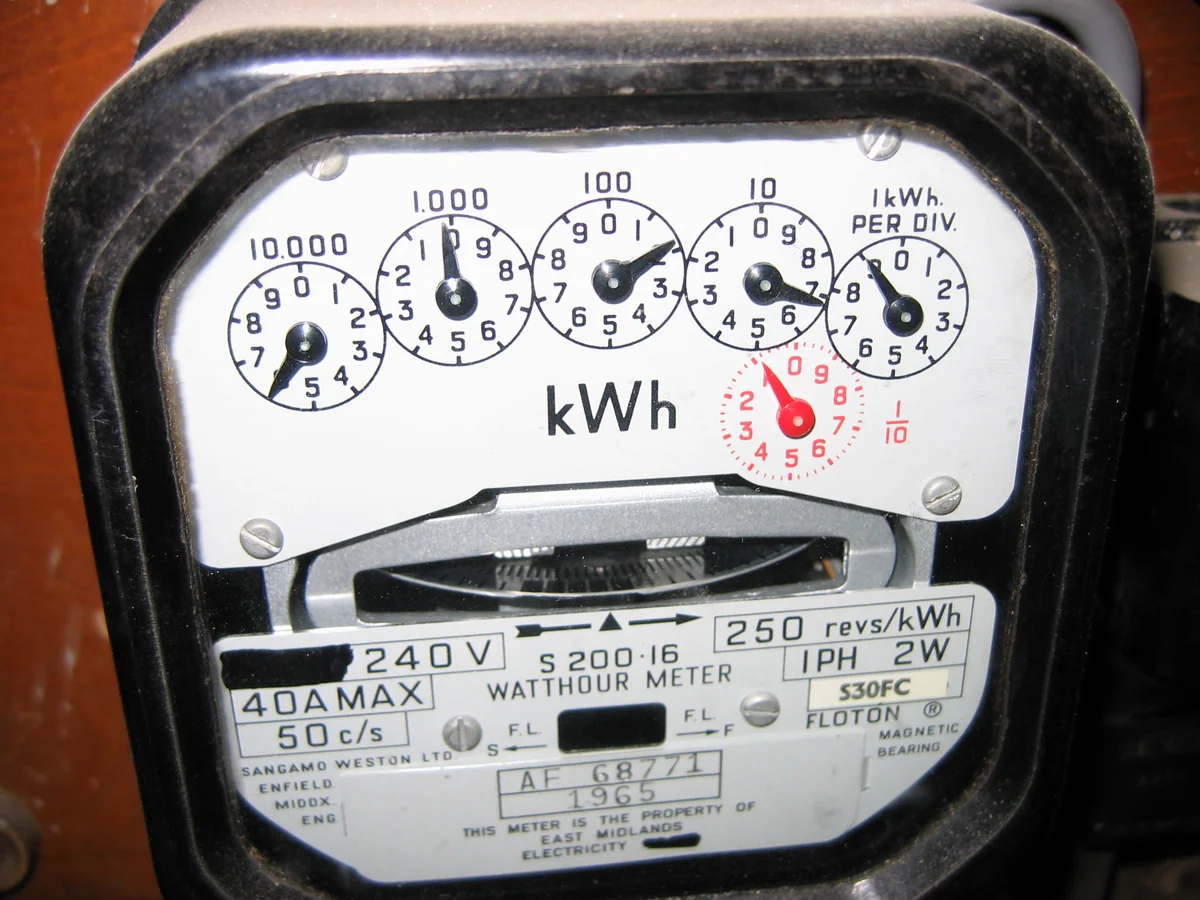
Photo by Mike1024 · Source: source page · Licence: Public domain (author dedication; NoRightsReserved) · Resized proportionally and converted to WebP; original content retained. Displayed in a landscape frame.
This service assesses agreed facilities, systems or processes using available bills, meter records, operating context and production data. The proposed output is a documented boundary, baseline, energy-performance indicators, evidence gaps, observations and a prioritised improvement register. It can be mapped to the Malaysian Energy Commission's report guidance or ISO 50002-1:2025 as agreed, but it is not a legal determination, certified audit, assurance opinion or promised saving.
01 / SEE THE REVIEW OUTPUT
Illustrative Energy Evidence Review
FICTIONAL SAMPLE / pre-audit evidence triage for one manufacturing site. This screen is a static illustration for discussion, not a connected customer system.
PROPOSED DASHBOARD CONCEPT
FICTIONAL SAMPLE / pre-audit evidence triage for one manufacturing siteIllustrative Energy Evidence Review
Illustrative open checks by source area
Fictional sample values · Bars compare fictional evidence checks only; they are not energy use, savings or site-performance results.
Unit: checks
| Source area | Records reviewed (count) | Complete records (count) | Open checks (count) | Evidence basis |
|---|---|---|---|---|
| Electricity bills | 12 | 10 | 2 | Monthly invoices |
| Natural-gas records | 8 | 6 | 2 | Supplier statements |
| Production output | 10 | 9 | 1 | Approved production totals |
| Equipment logs | 6 | 4 | 2 | Maintenance and operating logs |
AI-assisted draft / requires verification
Fictional rows show 36 source records, 29 currently complete and 7 open evidence checks. A reviewer should resolve period and unit gaps before interpreting energy performance or proposing measures.
02 / FIVE REVIEW STAGES
Five steps, with an accountable owner.
Evidence, assumptions and open questions move through a human review route. No certification or automatic conclusion is implied.
- 01↓
Scope and boundaries
Agree site, period and decision useConfirm facility, systems, baseline period, exclusions, access and the intended report or management decision.
OWNER / CONTROLClient sponsor / lead consultant - 02✓
Data and site evidence
Collect records and operating contextReview utility accounts, production drivers, equipment information and agreed walk-through observations with named data owners.
OWNER / CONTROLFacility team / consultant - 03≡
Performance analysis
Build a traceable baseline viewReconcile units and periods, examine significant energy uses, calculate agreed indicators and document assumptions and gaps.
OWNER / CONTROLEnergy analyst / facility reviewer - 04◎
Qualified review
Challenge findings and prioritiesDiscuss observations, feasibility, safety interfaces, measurement needs and improvement opportunities without treating estimates as commitments.
OWNER / CONTROLAuthorised facility representative / qualified reviewer - 05↗
Handover and next actions
Leave an owned decision recordDeliver the agreed report pack, evidence register, priority list and options for monitoring or further engineering work.
OWNER / CONTROLClient sponsor / consultant
If a check fails: Hold the record for its owner, correct the source and preserve the approved manual fallback.
03 / RESPONSIBILITIES
Organise the work. Keep conclusions with people.
The proposed support can structure records and questions; responsible owners still assess evidence, applicability and decisions.
| Review point | Common starting position | Proposed consultancy support | Responsible reviewer |
|---|---|---|---|
| Utility and fuel record reconciliation | Teams collate invoices and spreadsheets with inconsistent periods and units. | Proposed digital assistance can flag missing fields, duplicate periods and unit mismatches for review. | A data owner confirms the source, period, unit and correction before analysis. |
| Baseline and indicator preparation | Analysts repeatedly join energy and approved production records. | A scoped template can structure energy, activity and denominator fields and show calculation lineage. | The facility approves boundaries, production denominators and assumptions. |
| Opportunity register | Observations and possible measures are tracked across notes and email. | A proposed register can group findings by system, evidence status, owner and next decision. | Engineering and operations assess feasibility, safety interfaces and investment decisions. |
| Report handover | Evidence, caveats and actions are assembled into a final review pack. | Draft tables and exception lists can reduce re-keying while preserving source links. | The authorised representative accepts the deliverable; external assurance or statutory submission is separate. |
Create one traceable evidence view
Use agreed source owners, periods, units and reviewer fields so the assessment can show what is complete and what still needs confirmation.
Make performance context explicit
Document site boundaries, production drivers, significant energy uses and assumptions rather than presenting an unexplained single number.
Turn observations into decisions
Organise possible energy-saving measures by evidence, feasibility, responsible owner and the next measurement or engineering step.
Prepare a review-ready handover
Provide an audit trail and limitations that a facility team or suitably qualified auditor can challenge, accept or extend.
04 / HONEST HYPOTHETICAL FIGURES
Show the working behind a planning example.
These figures are modest arithmetic for discussion, not customer evidence, forecasts, emissions claims, payroll promises or guaranteed outcomes.
HYPOTHETICAL WORKED EXAMPLE / NOT CUSTOMER RESULTS
45 → 25 combined labour minutes for the same task.
18 one monthly utility-and-production evidence reconciliation pack units per month × 20 minutes less per unit.
12 → 5 per 100 checked error-affected administrative entries, not incidents, accidents, disease, product defects or environmental performance (7.0 percentage points).
See assumptions and calculations
| Measure | Illustrative calculation | Meaning and limit |
|---|---|---|
| Labour effort | (45 − 25) ÷ 45 × 100 = 44.4% | Same workload and expected review quality; includes ongoing exception checks as scoped. |
| Time capacity | (45 − 25) × 18 ÷ 60 = 6.0 hours | Released time is not payroll savings or guaranteed job reduction. |
| Admin checks | (12 − 5) ÷ 100 = 7.0 percentage points; 58.3% relative | Separate hypothetical like-for-like administrative check of records needing correction, not a safety, legal, certification or energy-saving guarantee. Actual measurement would use agreed samples and approved source records. |
Hypothetical same-workload comparison for one facility: before means manual collation, checking and consultant/client review; after means a scoped template plus proposed assistance, review and exception handling. It is administrative effort only, not headcount reduction, payroll saving or energy improvement.
Scenario figures are illustrative arithmetic, not benchmarks, forecasts, actual customer results or guarantees. Measure a like-for-like pilot with the same definitions before making a claim.
05 / PROPOSED DELIVERY
Agree the evidence and review route before work starts.
Confirm the assessment brief
Facilitate a short discovery session covering facilities, systems, periods, boundaries, stakeholders and the decision the work must support.
What you receiveSigned-off scope note, assumptions and data requestReconcile evidence
Review utility, fuel, production and equipment records, and record gaps, units, periods, sources and access constraints.
What you receiveEvidence register and exception logAssess performance
Prepare the agreed baseline, indicators, significant-energy-use view and candidate improvement measures with traceable assumptions.
What you receiveDraft assessment and opportunity registerReview and hand over
Walk through findings with client owners, capture decisions and separate any future engineering, implementation, submission or assurance work.
What you receiveFinal agreed report pack and next-action roadmap06 / BEFORE YOU INVEST
Inputs, boundaries and ownership should be clear.
These lists are a starting point. Final scope, access, professional responsibility and outputs require written agreement.
What to prepare
- Facility sponsor's approved boundary, site map and operating calendar
- Utility and fuel bills or meter exports with account or meter references, units and reporting periods, owned by finance or facilities
- Production volumes, operating hours and relevant activity drivers approved by production control
- Equipment lists, maintenance records, operating schedules and available sub-meter data from engineering and maintenance
- Existing energy policy, targets, prior studies and designated reviewers, supplied by the sustainability or energy lead
What to agree in writing
- This is scoped consultancy and proposed digital assistance, not installed software, continuous monitoring, machinery control or an automatic energy-management system.
- A statutory EECA report, where applicable, must be prepared and signed by the appropriately registered professional; AIGreen Plus does not represent this page as accredited assurance or a certification.
- Energy, cost and improvement figures remain estimates until the client validates factors, tariffs, operating conditions and measurement method; no saving or carbon outcome is promised.
- Access, retention, confidentiality, anonymisation and any site safety arrangements require written agreement with the client; only necessary records should be shared.
- Legal, regulatory, tax, funding and engineering design decisions stay with qualified Malaysian advisers and authorised client personnel; scope, fees, licences, training and support are agreed separately.
Confidence comes from traceable evidence.
Set definitions, boundaries, source ownership and review responsibility before interpreting a result. A qualified responsible person decides whether a finding is applicable.
07 / CLEAR ANSWERS
10 questions. Practical answers.
Clear answers
Frequently asked questions.
Ten practical answers about scope, sources, review and responsible use.
What does an energy audit and performance assessment cover?
The agreed work can cover one or more Malaysian manufacturing facilities, utilities, fuels, processes or equipment groups. It normally produces a boundary, baseline period, energy-use view, indicators, evidence gaps, observations and an improvement register. The exact depth and report format are confirmed in writing.
What data should we prepare first?
Start with utility and fuel bills or meter exports, approved production volumes, operating hours, equipment and maintenance information, and prior studies. Each record should retain its source, unit, period and reviewer. We can begin with an anonymised sample to identify gaps before wider access.
Which method or standard can guide the work?
The scope can be aligned to the Malaysian Energy Commission's published Energy Audit Report guideline or structured with ISO 50002-1:2025 concepts, as appropriate. Those references do not make this service a certification or statutory submission. The selected method and limitations belong in the agreed brief.
Who signs off the findings?
Client facility, finance, production and engineering owners validate their records and assumptions. An authorised client representative accepts the agreed deliverable. If a statutory or formal audit requires a Registered Energy Auditor, that role and responsibility must be separately confirmed; AIGreen Plus does not imply that status here.
Is this a certified audit or assurance opinion?
No. It is consultancy that can help organise evidence and prepare a reviewable assessment. Readiness for a later review is different from external verification, accreditation or certification. Any required registered auditor, verifier, regulator or certification body is appointed and accountable under a separate arrangement.
Are the dashboard figures actual energy results?
No. Dashboard rows and scenario values are fictional illustrations of evidence-review structure and modest administrative effort. They are not customer measurements, benchmarks, energy savings, carbon reductions or headcount claims. Any real calculation requires approved site data, factors, boundaries and a documented review.
How are confidentiality and site access handled?
Access is limited to agreed people, records, locations and retention terms. The client should remove unnecessary personal or commercially sensitive data and approve any site visit or export. A written scope should address confidentiality, security, storage and manual fallback; this page is not a compliance promise.
Can this work with our existing spreadsheets or meters?
Yes, feasibility is assessed rather than assumed. We can review exports, spreadsheets and available sub-meter records, then document field mapping and gaps. No integration, live connection, IoT collection or map service is already provided. Any interface or licence needs written technical and commercial approval.
How long will the assessment take?
Timing depends on the number of sites and systems, data completeness, production schedules, access approvals, site safety requirements and review availability. We will propose milestones after discovery rather than inventing a duration. Delayed or changed source data can move the review and handover dates.
What affects the quotation and ongoing support?
Pricing depends on sites, audit depth, records, travel or site access, data preparation, chosen method, report format and review cycles. Recurring monitoring, implementation, engineering design, statutory submission, training and support are separate options. No fixed price, 24/7 service or outcome is promised by this page.
START WITH ONE CLEAR QUESTION
Discuss this outline ↗Discuss Energy Audit and Energy Performance Assessment
Share a high-level question and the type of evidence involved—not confidential records. We can discuss discovery, scope and a written way to review the work.
08 / SOURCE NOTES
Check the current public material.
These references support an initial discussion only. They do not make AIGreen Plus an accredited or certified verifier.
Public official material — not accreditation.
- Suruhanjaya Tenaga: Energy Efficiency and Conservation Act (EECA) 2024
EECA 2024 came into effect on 1 January 2025, applies to Peninsular Malaysia and Labuan, and the Energy Commission lists energy-audit guidance and Registered Energy Auditor roles; applicability must still be checked for the organisation.
- Suruhanjaya Tenaga: Guidelines on Energy Audit Report
The official guideline defines an energy audit as a systematic and objective assessment of energy needs, consumption and efficiency, and outlines report elements including methodology, facility operation, baseline, findings, energy-saving measures and improvement plan.
- ISO 50002-1:2025 Energy audits — Part 1
ISO's public page describes general requirements and guidance for energy audits across buildings, processes, systems and transport, and notes that the standard can support energy-management work without being limited to one sector.
These official pages support the bounded definition, Malaysian guidance context and optional ISO method reference used here. EECA applicability, registered-auditor duties, safety obligations and any submission requirement must be confirmed for the organisation, facility, location and reporting period with qualified Malaysian advisers; this marketing page is not legal, tax, engineering or assurance advice.
Dashboards and numerical scenarios are fictional planning examples. The services are proposed consultancy scopes, not certification, accreditation, assurance, legal advice, regulatory approval or a promise of emissions, cost, staffing, safety, quality or market outcomes.
