


CLIMATE CHANGE & NET ZERO
Climate Change Risk Assessment
Turn climate uncertainty into a reviewable risk and adaptation roadmap. Built around your sites, products and decisions.
AIGreen Plus can facilitate a scoped assessment of physical and transition climate risks across selected Malaysian manufacturing sites, products and suppliers. We organise evidence, test agreed assumptions and prepare a prioritised adaptation roadmap for management review. The work is consultancy and proposed digital assistance, not installed software, assurance or a promise of resilience.
Human review retainedCurrent-source check is conditionalFictional dashboard concept
See the review dashboard ↓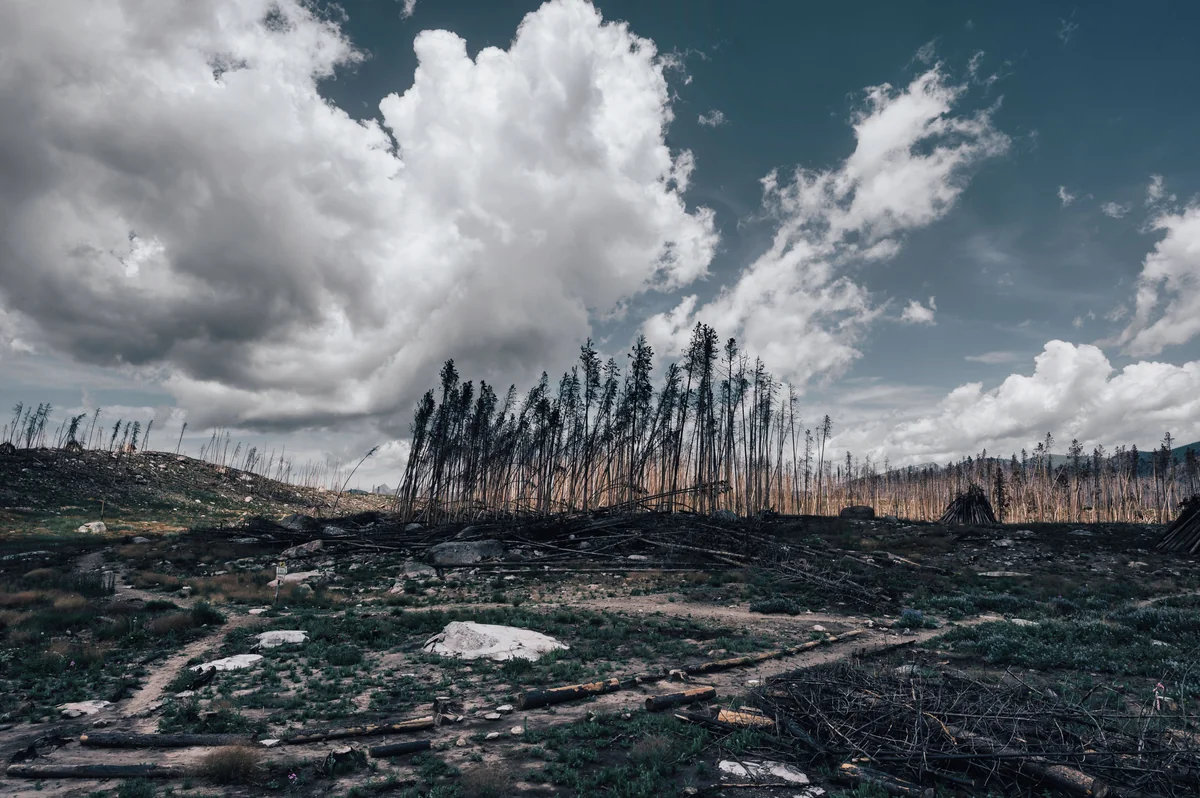
Photo by Alfo Medeiros · Source: source page · Licence: Pexels License (free commercial use; attribution not required) · Resized proportionally and converted to WebP; original content retained. Displayed in a landscape frame.
This service helps a manufacturer identify climate-related physical risks such as heat, flood or water stress, and transition risks such as changing customer, energy or policy expectations. We review the chosen boundary, data and time horizons, then document assumptions, risk ratings, resilience questions and practical actions. Management and qualified advisers retain responsibility for materiality, legal applicability, capital decisions and any final disclosure or assurance.
01 / SEE THE REVIEW OUTPUT
Climate Risk Evidence Review
FICTIONAL SAMPLE / initial boundary and adaptation workshop. This screen is a static illustration for discussion, not a connected customer system.
PROPOSED DASHBOARD CONCEPT
FICTIONAL SAMPLE / initial boundary and adaptation workshopClimate Risk Evidence Review
Fictional records by assessment lens
Fictional sample values · Bars compare fictional work items selected for the workshop; they are not a hazard probability, loss estimate or performance result
Unit: records
| Area / record set | Records reviewed | Evidence complete | Open review flags |
|---|---|---|---|
| Site hazard register | 12 | 9 | 3 |
| Critical supplier screens | 10 | 7 | 3 |
| Product and customer requests | 8 | 6 | 2 |
| Adaptation action log | 6 | 4 | 2 |
AI-assisted draft / requires verification
Fictional rows suggest that 10 of 36 records still need evidence review. The draft prioritises boundary and source checks across site, supplier, product and action records; it does not infer severity, financial loss or a final response.
02 / FIVE REVIEW STAGES
Five steps, with an accountable owner.
Evidence, assumptions and open questions move through a human review route. No certification or automatic conclusion is implied.
- 01↓
Scope and boundaries
Choose sites, value chain and horizonsAgree the assessment question, locations, assets, value-chain coverage, decision horizons and materiality approach.
OWNER / CONTROLClient sponsor / qualified adviser - 02✓
Data and evidence
Collect approved, traceable inputsReview site, supplier, asset, production, water, energy, customer and policy evidence with source and date recorded.
OWNER / CONTROLClient data owners / consultant - 03≡
Risk and resilience analysis
Test physical and transition pathwaysAssess agreed scenarios and assumptions qualitatively or quantitatively, documenting uncertainty, dependencies and potential business implications.
OWNER / CONTROLConsultant / technical reviewers - 04◎
Qualified review
Challenge ratings and assumptionsHold a structured review of evidence quality, risk prioritisation, resilience questions and proposed controls before any decision is made.
OWNER / CONTROLManagement / risk and finance owners - 05↗
Handover and roadmap
Leave a decision-ready action registerHandover a traceable findings pack, open questions, owners, indicative sequencing and a method for periodic reassessment.
OWNER / CONTROLClient sponsor / authorised approver
If a check fails: Hold the record for its owner, correct the source and preserve the approved manual fallback.
03 / RESPONSIBILITIES
Organise the work. Keep conclusions with people.
The proposed support can structure records and questions; responsible owners still assess evidence, applicability and decisions.
| Review point | Common starting position | Proposed consultancy support | Responsible reviewer |
|---|---|---|---|
| Map climate exposures across selected sites and suppliers | Teams reconcile spreadsheets, maps, registers and emails by hand | Proposed evidence index and structured comparison view for agreed records | Risk owner confirms boundary, location, relevance and rating |
| Compare physical and transition risk assumptions | Analysts copy scenario notes and policy or customer signals into working papers | Proposed template that links each assumption to a source, horizon and affected activity | Qualified reviewer challenges scenario choice and uncertainty |
| Prioritise adaptation responses | Workshop notes are converted into action lists with inconsistent rationale | Proposed action register with rationale, dependency, owner and review status | Management approves priorities, budget questions and sequencing |
| Prepare climate-risk evidence for reporting readiness | Disclosure teams search for governance, process and resilience evidence late in the cycle | Proposed cross-reference of evidence to an agreed reporting checklist | Management and reporting advisers determine applicability and final wording |
Make the question explicit
Facilitate a documented boundary covering selected sites, value-chain links, assets, products and decision horizons.
Trace assumptions to sources
Create an evidence register that records source, date, unit, geography, confidence and unresolved gaps without inventing data.
Separate risk lenses
Structure physical and transition analysis so scenarios, dependencies, uncertainty and affected decisions remain visible.
Build an adaptable roadmap
Translate reviewed findings into candidate actions, owners, dependencies, decision gates and reassessment prompts for approval.
04 / HONEST HYPOTHETICAL FIGURES
Show the working behind a planning example.
These figures are modest arithmetic for discussion, not customer evidence, forecasts, emissions claims, payroll promises or guaranteed outcomes.
HYPOTHETICAL WORKED EXAMPLE / NOT CUSTOMER RESULTS
90 → 55 combined labour minutes for the same task.
16 one site-or-supplier climate evidence review pack units per month × 35 minutes less per unit.
12 → 5 per 100 checked error-affected administrative evidence entries, not climate incidents, environmental compliance, asset damage or business outcomes (7.0 percentage points).
See assumptions and calculations
| Measure | Illustrative calculation | Meaning and limit |
|---|---|---|
| Labour effort | (90 − 55) ÷ 90 × 100 = 38.9% | Same workload and expected review quality; includes ongoing exception checks as scoped. |
| Time capacity | (90 − 55) × 16 ÷ 60 = 9.3 hours | Released time is not payroll savings or guaranteed job reduction. |
| Admin checks | (12 − 5) ÷ 100 = 7.0 percentage points; 58.3% relative | Separate hypothetical like-for-like check of 100 administrative entries: 12 versus 5 entries contain an evidence-link, date, unit or boundary error after review. It is not a benchmark, measured result or assurance conclusion. |
Hypothetical same-workload comparison: a client coordinator and consultant spend 90 combined minutes assembling, checking and reconciling one evidence pack before a structured template; the same pack takes 55 combined minutes after the proposed template is agreed. Both figures include review and exception effort and are not a staffing, payroll or emissions estimate.
Scenario figures are illustrative arithmetic, not benchmarks, forecasts, actual customer results or guarantees. Measure a like-for-like pilot with the same definitions before making a claim.
05 / PROPOSED DELIVERY
Agree the evidence and review route before work starts.
Boundary workshop
Clarify the manufacturing sites, suppliers, products, decisions, time horizons and intended users of the assessment.
What you receiveSigned scope note, data request and assumptions logEvidence and source review
Check approved records and external climate or policy inputs for relevance, date, geography, completeness and traceability.
What you receiveEvidence register, gap list and source-bounded working papersAnalysis and challenge session
Facilitate physical and transition risk analysis, scenario discussion, uncertainty review and candidate adaptation responses.
What you receiveRisk-and-resilience workbook with review commentsRoadmap handover
Present findings and open questions, then refine an action register for management or qualified advisers to approve and maintain.
What you receiveHandover pack and prioritised candidate adaptation roadmap06 / BEFORE YOU INVEST
Inputs, boundaries and ownership should be clear.
These lists are a starting point. Final scope, access, professional responsibility and outputs require written agreement.
What to prepare
- Approved site list, locations, operating boundaries and asset or process summaries from the operations owner
- Dated hazard, interruption, water, energy and maintenance records supplied by facilities, EHS or engineering teams
- Supplier, logistics, customer and product exposure information approved by procurement and commercial owners
- Relevant policies, scenario sources, assumptions and existing risk registers selected by the client risk owner
- Governance, reporting-calendar, action-owner and investment-decision context provided by management and finance
What to agree in writing
- This is scoped consultancy and proposed digital assistance; no software is assumed to be installed, integrated or continuously monitored.
- The client approves data, boundaries, scenarios, ratings and actions; AIGreen Plus does not make legal, tax, investment, operational or disclosure decisions.
- Readiness support is not independent assurance, certification, accreditation or a representation that an organisation conforms to IFRS S2, NSRF or another requirement.
- Use anonymised or minimum-necessary business data where possible; access, retention, confidentiality, security and any system connection require written agreement.
- External advisers must confirm current Malaysian applicability, reporting phase, methodology, factors and regulatory interpretation for the organisation and period.
Confidence comes from traceable evidence.
Set definitions, boundaries, source ownership and review responsibility before interpreting a result. A qualified responsible person decides whether a finding is applicable.
07 / CLEAR ANSWERS
10 questions. Practical answers.
Clear answers
Frequently asked questions.
Ten practical answers about scope, sources, review and responsible use.
What does a Climate Change Risk Assessment and Adaptation Planning engagement cover?
It covers an agreed boundary, evidence review, physical and transition risk analysis, scenario and uncertainty documentation, a qualified challenge session and a candidate adaptation roadmap. It does not promise resilience, quantify loss without support or replace management decisions, legal advice or independent assurance.
What information should a Malaysian manufacturer prepare first?
Start with the selected sites and locations, key assets and processes, interruption and hazard records, water and energy context, critical suppliers, logistics and customer requirements. Add existing risk registers, policies and action logs. We agree the minimum necessary set before any confidential data is shared.
Which method or standard will you use?
The method is agreed during scoping. Where relevant, the work can organise evidence around IFRS S2 concepts such as physical and transition risks, governance, risk management and climate resilience, while the Malaysian NSRF provides a local reporting context. A qualified adviser confirms applicability and final interpretation.
Who signs off the risk ratings and adaptation actions?
Your authorised management, risk, finance, engineering or sustainability owners approve the boundary, assumptions, ratings and priorities. A consultant can facilitate and document challenge, but cannot sign on the client’s behalf or turn a draft into a certified or assured conclusion.
Is this readiness work the same as certification or assurance?
No. The output can improve traceability and readiness for a later reporting or assurance process, but AIGreen Plus does not provide independent assurance through this service and does not claim accredited certification capability. An eligible external assurer or qualified adviser remains separate.
Are the dashboard figures and time scenario actual results?
No. The dashboard rows and the 90-to-55-minute scenario are fictional illustrations of how evidence completeness and administrative effort might be discussed. They are not customer data, benchmarks, headcount savings, payroll savings, carbon reductions, energy improvements or a forecast.
How are confidentiality and access handled?
We agree the data boundary, approved users, transfer method, retention and deletion terms before work begins. Use anonymised or aggregated records where feasible. Security controls and Malaysian privacy or regulatory obligations require qualified client review; this page is not a compliance determination.
Can this work use our existing spreadsheets or systems?
Usually, the initial assessment can start with approved exports, spreadsheets and documents rather than a new platform. Feasibility depends on format, ownership, quality and access. Any API, connector, automation, licence, testing or ongoing maintenance is a separately agreed scope, not an assumed integration.
How long will the assessment take?
Timing depends on the number of sites, value-chain coverage, evidence readiness, scenario choices and review availability. We confirm milestones after the boundary workshop. No fixed duration or reporting deadline is promised here, and client evidence and qualified review remain dependencies.
What affects the quotation and what support continues afterwards?
Scope drivers include sites, suppliers, scenarios, data preparation, workshops, technical review, reporting cross-reference and handover needs. We provide a written proposal rather than a fabricated price. Recurring monitoring, refreshes, training or support terms are optional deliverables agreed separately; 24/7 support is not implied.
START WITH ONE CLEAR QUESTION
Discuss this outline ↗Discuss Climate Change Risk Assessment
Share a high-level question and the type of evidence involved—not confidential records. We can discuss discovery, scope and a written way to review the work.
08 / SOURCE NOTES
Check the current public material.
These references support an initial discussion only. They do not make AIGreen Plus an accredited or certified verifier.
Public official material — not accreditation.
- IFRS S2 Climate-related Disclosures
Official objective and scope of IFRS S2, including physical risks, transition risks, opportunities, governance, strategy, risk-management processes and climate resilience disclosures; the page states IFRS S2 is effective for annual periods beginning on or after 1 January 2024.
- Malaysia Securities Commission National Sustainability Reporting Framework
Official Malaysian context that the NSRF uses IFRS S1 and IFRS S2 as baseline sustainability disclosure standards, with a phased and developmental approach, climate-first emphasis and transition reliefs; it does not establish that every manufacturer is in scope.
- IFRS S2 Climate-related Disclosures, issued HTML standard
Official standard text on climate-resilience scenario analysis and risk-management inputs, including scenarios, time horizons, operating scope, assumptions and integration with overall risk management.
These official pages support the bounded risk, resilience, scenario and Malaysian reporting-context descriptions only. They do not determine a client’s legal or reporting applicability, assurance status, methodology, factors or deadlines; qualified advisers must confirm those for the organisation and reporting period.
Dashboards and numerical scenarios are fictional planning examples. The services are proposed consultancy scopes, not certification, accreditation, assurance, legal advice, regulatory approval or a promise of emissions, cost, staffing, safety, quality or market outcomes.
