


CARBON ACCOUNTING & GHG EMISSIONS
GHG Validation and Verification Readiness
Make every GHG figure traceable before an external reviewer sees it. Readiness is preparation, not assurance.
AIGreen Plus helps Malaysian manufacturers organise a review-ready GHG inventory: boundaries, activity data, factors, calculations, evidence and approvals. The engagement is a scoped consultancy and preparation template, not an installed application, accredited assurance service or promise that an external verifier will accept the statement.
Human review retainedCurrent-source check is conditionalFictional dashboard concept
See the review dashboard ↓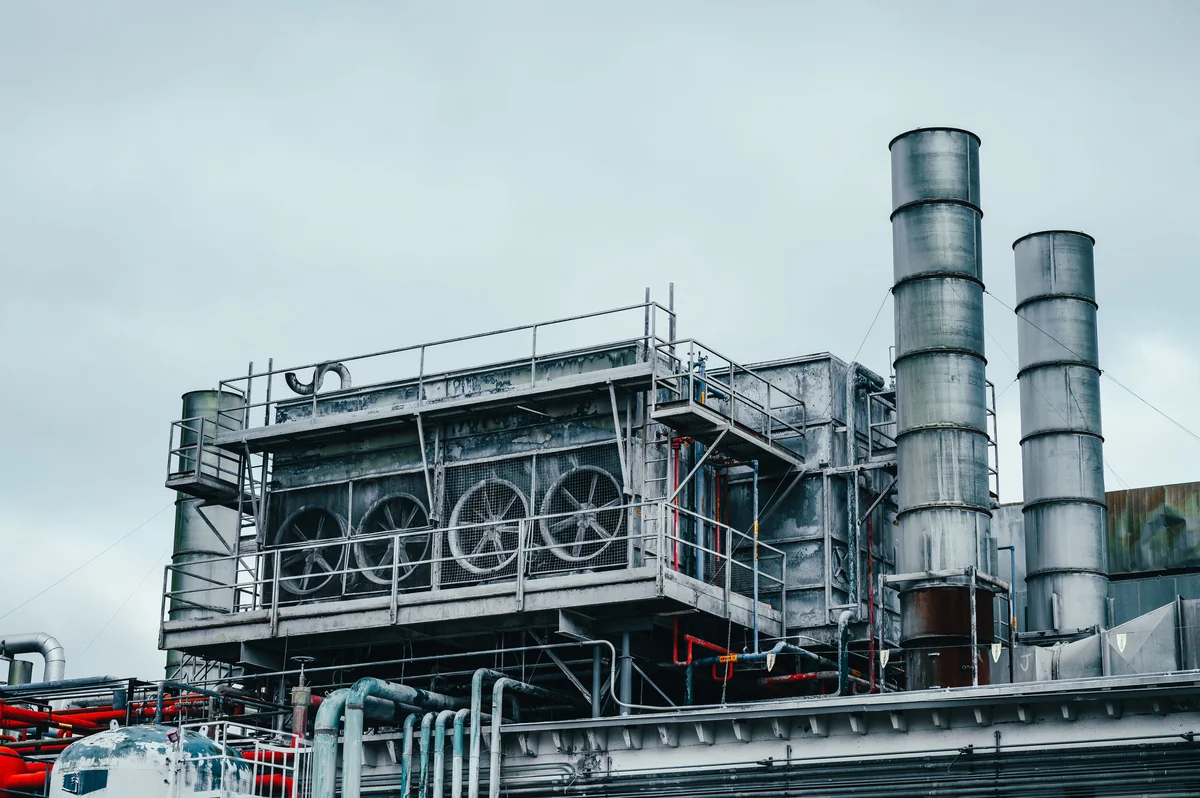
Photo by Brett Sayles · Source: source page · Licence: Pexels License · Resized proportionally and converted to WebP; original content retained. Displayed in a landscape frame.
This service prepares a manufacturer for qualified external validation or verification by testing whether its GHG statement can be followed from organisational boundary to activity record, emission factor, calculation trace and accountable approval. We can review Scope 1, Scope 2 and selected Scope 3 categories, log evidence gaps and assemble a management-ready action pack. Client owners remain responsible for source records and sign-off; any external assurance is separately appointed.
01 / SEE THE REVIEW OUTPUT
Illustrative GHG evidence-readiness view
FICTIONAL SAMPLE / four source records in a preparation review. This screen is a static illustration for discussion, not a connected customer system.
PROPOSED DASHBOARD CONCEPT
FICTIONAL SAMPLE / four source records in a preparation reviewIllustrative GHG evidence-readiness view
Fictional source records by GHG scope
Fictional sample values · Bars count only the four fictional rows above; they do not represent emissions, completeness of a real inventory or assurance results.
Unit: records
| Fictional source record | Scope | Activity data / unit | Evidence status | Factor and trace status |
|---|---|---|---|---|
| Diesel for site vehicles | Scope 1 | 1,200 L | Attached | Source/version/date logged |
| Natural gas for process heat | Scope 1 | 800 m³ | Attached | Calculation trace logged |
| Purchased electricity | Scope 2 | 18,000 kWh | Attached | Factor source/date logged |
| Purchased aluminium inputs | Scope 3 | 42 t | Gap to request | Supplier factor and period missing |
AI-assisted draft / requires verification
Fictional sample review found three of four source records with an evidence marker and one Scope 3 supplier-data gap. A consultant would ask the named client owners to confirm the boundary, factor trace and period before any statement is presented for external review.
02 / FIVE REVIEW STAGES
Five steps, with an accountable owner.
Evidence, assumptions and open questions move through a human review route. No certification or automatic conclusion is implied.
- 01↓
Set boundary and criteria
Agree scope before calculationsConfirm organisational and operational boundaries, reporting period, included Scope 1, 2 and 3 categories, intended use and criteria with the client.
OWNER / CONTROLConsultant / authorised client sponsor - 02✓
Map data and evidence
Follow activity to sourceMap fuel, electricity, refrigerant, transport and selected purchased-goods activities to owners, units, invoices, meters, logs and supplier evidence.
OWNER / CONTROLClient data owners / consultant - 03≡
Trace calculations and factors
Make assumptions visibleReview selectable units, conversions, emission factor source, version and date, calculation trace, exclusions and estimation notes without silently replacing client-approved inputs.
OWNER / CONTROLConsultant / technical reviewer - 04◎
Run readiness review
Test gaps and exceptionsPerform a bounded document and reasonableness review, record unresolved items and distinguish preparation findings from any external verifier's conclusion.
OWNER / CONTROLIndependent client reviewer / consultant - 05↗
Handover and approve
Leave an accountable packDeliver the evidence index, issue log, preparation template and action roadmap for authorised management approval and any separately appointed assurance provider.
OWNER / CONTROLClient management / appointed assurance provider
If a check fails: Hold the record for its owner, correct the source and preserve the approved manual fallback.
03 / RESPONSIBILITIES
Organise the work. Keep conclusions with people.
The proposed support can structure records and questions; responsible owners still assess evidence, applicability and decisions.
| Review point | Common starting position | Proposed consultancy support | Responsible reviewer |
|---|---|---|---|
| Inventory boundary and category register | Boundary decisions and inclusions sit across emails and spreadsheets. | Proposed structured register records Scope 1, 2, 3 category, rationale, period and owner. | Authorised client confirms the boundary and reporting criteria. |
| Activity, factor and unit trace | Staff reconcile invoices, meters, units and factor references line by line. | Proposed preparation template links activity, selectable unit, kgCO2e/unit factor, source/version/date and calculation trace. | Technical reviewer checks appropriateness, conversions and estimates. |
| Evidence and exception register | Missing records and supplier follow-ups are tracked in separate lists. | Proposed evidence index groups documents, gaps, assumptions, reviewer comments and next actions. | Data owners provide evidence and accept or correct each exception. |
| Readiness pack and sign-off | A draft statement is circulated without a consistent approval trail. | Proposed handover pack shows status, calculation links, open items and approval fields. | Management approves the client statement; an external provider decides any assurance conclusion. |
Make inclusion decisions explicit
Use a scoped boundary and category register so site, leased asset and value-chain decisions have an owner and rationale.
Preserve calculation lineage
Capture activity unit, factor unit, factor source, version, date, conversion and reviewer fields for each prepared line.
Prepare a usable evidence index
Organise invoices, meter records, logs, supplier responses and assumptions against the relevant source and period.
Surface review work early
Prioritise gaps and approval questions before a separately appointed qualified external reviewer is engaged.
04 / HONEST HYPOTHETICAL FIGURES
Show the working behind a planning example.
These figures are modest arithmetic for discussion, not customer evidence, forecasts, emissions claims, payroll promises or guaranteed outcomes.
HYPOTHETICAL WORKED EXAMPLE / NOT CUSTOMER RESULTS
180 → 60 combined labour minutes for the same task.
22 one daily GHG evidence-reconciliation cycle units per month × 120 minutes less per unit.
8 → 3 per 100 checked error-affected administrative evidence-reconciliation entries, not emissions reductions, environmental compliance or assurance outcomes (5.0 percentage points).
See assumptions and calculations
| Measure | Illustrative calculation | Meaning and limit |
|---|---|---|
| Labour effort | (180 − 60) ÷ 180 × 100 = 66.7% | Same workload and expected review quality; includes ongoing exception checks as scoped. |
| Time capacity | (180 − 60) × 22 ÷ 60 = 44.0 hours | Released time is not payroll savings or guaranteed job reduction. |
| Admin checks | (8 − 3) ÷ 100 = 5.0 percentage points; 62.5% relative | Separate hypothetical like-for-like administrative check using 100 entries: eight versus three entries require correction. The figures are not a benchmark, measured client result or guarantee. |
FICTIONAL same-workload illustration only: three staff each spend 60 minutes before the proposed preparation template (3 x 60 = 180 combined labour minutes), versus three staff each spending 20 minutes after a scoped template and review routine (3 x 20 = 60). Both figures include client review and exception effort; they do not represent headcount, payroll or environmental savings.
Scenario figures are illustrative arithmetic, not benchmarks, forecasts, actual customer results or guarantees. Measure a like-for-like pilot with the same definitions before making a claim.
05 / PROPOSED DELIVERY
Agree the evidence and review route before work starts.
Discovery and criteria workshop
Confirm sites, organisational approach, reporting period, intended disclosure or customer use, Scope 1 and 2 sources, selected Scope 3 categories and accountable approvers.
What you receiveApproved scope-and-criteria briefEvidence and calculation preparation
Review anonymised or approved records and populate the preparation template with activities, units, factors, sources, versions, dates, calculations and evidence links.
What you receiveTraceable draft inventory workbook and evidence indexReadiness challenge and gap log
Challenge boundary logic, period consistency, factor trace, estimates, exclusions and approval trail; route questions to named client owners rather than making unapproved assumptions.
What you receiveExceptions, decisions and remediation logManagement handover
Walk through the pack, open items and reviewer fields, then support management's decision on whether and when to appoint an external validation or verification provider.
What you receiveHandover pack and next-step roadmap06 / BEFORE YOU INVEST
Inputs, boundaries and ownership should be clear.
These lists are a starting point. Final scope, access, professional responsibility and outputs require written agreement.
What to prepare
- Approved organisational and operational boundary, reporting period, sites and source-category register from the sustainability sponsor
- Fuel, refrigerant, process and owned-vehicle activity records with units, periods and evidence from operations and facilities
- Purchased electricity, heat or steam records and supplier or utility documentation from facilities and finance
- Selected Scope 3 activity data such as purchased materials, freight, waste or business travel with procurement and supplier evidence
- Client-approved emission factors or factor candidates with source, version, date, unit, rationale and technical reviewer, plus calculation workpapers and sign-off records
What to agree in writing
- This is consultancy and a preparation template; it is not an installed app, live integration, certified result or independent assurance opinion.
- The client approves boundaries, categories, factors, estimates, exclusions and final GHG statements; AIGreen Plus does not replace management or an appointed verifier.
- Only the agreed sites, period, sources and Scope 3 categories are reviewed; legal, tax, regulatory and programme applicability is confirmed separately with qualified advisers.
- Use least-necessary approved or anonymised records, agreed access and retention; confidentiality, security controls and any cross-border handling require written agreement.
- Fees, timing, recurring support, factor licensing, translation, site visits, laboratory work and external assurance-provider work are separate scope items unless written into the engagement.
Make activity, units and evidence easy to check.
Scope and category are proposed classification fields. Confirm organisational and operational boundaries first; the same activity must not be counted twice across sources. Scope 3 relevance and calculation methods require screening, not automatic selection.
Direct emissions within the agreed boundary
- Stationary combustion
- Mobile combustion
- Process emissions
- Fugitive emissions / refrigerants
Purchased or acquired energy
- Electricity
- Steam
- Heating
- Cooling
Other value-chain emissions
- Screen the fifteen categories below
- Record the chosen method and estimation basis
- Keep upstream/downstream and lease boundaries consistent
Scope 3 category reference — fifteen categories to screen
- 01Purchased goods and services
- 02Capital goods
- 03Fuel- and energy-related activities (not included in Scope 1 or Scope 2)
- 04Upstream transportation and distribution
- 05Waste generated in operations
- 06Business travel
- 07Employee commuting
- 08Upstream leased assets
- 09Downstream transportation and distribution
- 10Processing of sold products
- 11Use of sold products
- 12End-of-life treatment of sold products
- 13Downstream leased assets
- 14Franchises
- 15Investments
Category names follow GHG Protocol — Scope 3 Calculation Guidance (read 2026-10-22). The official public guidance lists fifteen Scope 3 categories and category-specific calculation methods. The list is a screening reference, not a finding that every category applies to a manufacturer.
| Field group | Example contents / selections | Review check |
|---|---|---|
| Record identity | Site/entity, reporting period, activity owner and source record ID | Keep the agreed boundary and period consistent. |
| Activity/source | Fuel invoice, electricity meter, shipment, supplier record or process record | Identify the evidence and whether the value is measured or estimated. |
| Quantity and selectable unit | Examples: litres, kg, kWh, km, tonne-km or units of product | Choose a unit appropriate to the method; do not interchange units without a documented conversion. |
| Emission factor and factor unit | Numeric factor field; example unit kgCO₂e/kWh or kgCO₂e/litre | No default or approved factor is supplied here. The factor denominator must match the activity unit. |
| Factor provenance | Source, version/year, publication date, geography, gas/GWP basis and method | Qualified reviewers approve applicability, conversion and any licensed factor data. |
| Evidence and reviewer | Document reference, estimation basis, data-quality flag, owner and approval status | Trace each calculation to approved records and retain unresolved exceptions. |
Optional fleet, maps and IoT feasibility
Fleet telematics, route/map services and meter or sensor data may be assessed later. Provider/API rights, devices, calibration, coverage, timestamps, quality, privacy, access security, compatibility and cost need discovery and written agreement. This website does not track vehicles, read sensors or collect live customer data.
This is an educational proposal panel, not a form, upload feature, factor database, live integration or calculated emissions result. Numerical dashboard values elsewhere are fictional; approved source data and qualified review are required for an actual engagement.
Confidence comes from traceable evidence.
Set definitions, boundaries, source ownership and review responsibility before interpreting a result. A qualified responsible person decides whether a finding is applicable.
07 / CLEAR ANSWERS
10 questions. Practical answers.
Clear answers
Frequently asked questions.
Ten practical answers about scope, sources, review and responsible use.
What does GHG Validation and Verification Readiness cover for a Malaysian manufacturer?
It covers a scoped review of boundaries, selected Scope 1, 2 and 3 categories, activity data, units, factors, calculations, evidence, exceptions and approvals. The output is a preparation pack and action log for management and a separately appointed qualified external reviewer.
What data should we prepare first?
Start with the reporting period and sites, boundary decision, fuel and refrigerant records, electricity bills or meter data, relevant process records, transport and waste data, selected purchased-material information, factor references and the documents that support each figure.
Which method or standard will you use?
The proposed approach can be aligned to the GHG Protocol Corporate Standard and, where the engagement requires it, readiness mapped to relevant ISO 14064-3 verification concepts. The applicable programme, criteria and reporting purpose must be confirmed for the organisation and period; this is not a substitute for the paid standards or legal advice.
Who signs off the inventory and evidence pack?
Client management and named data owners remain accountable for boundaries, source records, factors, estimates and the final statement. A technical reviewer can document checks. An external validation or verification provider, if appointed, controls its own procedures and conclusion.
Does readiness mean we are certified or already verified?
No. Readiness means the evidence and calculation trail has been prepared for a qualified external review. It is not certification, accreditation, an assurance opinion or a promise that a verifier, customer or programme will accept the statement.
Are the dashboard figures and administrative scenario actual results?
No. Every dashboard value and scenario number in this page is fictional and illustrative. They are designed to show coherent records and a measurement basis, not measured emissions, energy or labour savings, a benchmark, a headcount change or an assurance result.
How will confidentiality and access be handled?
Agree approved folders, named roles, least-necessary data, anonymisation where practical, retention and transfer controls before review. This page does not promise compliance with Malaysian privacy or cybersecurity requirements; the client's qualified advisers should confirm those requirements.
Can this work use our existing spreadsheets, ERP exports or utility records?
Yes, subject to discovery and readable exports. We do not claim a pre-existing integration or installed software. The team can map approved files manually or through an agreed delivery method, while the client validates units, periods, factor references and source ownership.
How long does the readiness work take?
Timing depends on site count, category coverage, data quality, supplier responses, factor decisions, access and review cycles. We do not invent a duration here. A written plan can set milestones after discovery, with timing dependencies and client response points made explicit.
What is included in a quote and what support continues afterward?
A quote should state sites, period, categories, records, workshops, review depth, travel, factor research, template licensing, external-provider coordination and handover. Ongoing refreshes, future reporting cycles, training and support are separate choices; no 24/7 service or recurring price is implied.
START WITH ONE CLEAR QUESTION
Discuss this outline ↗Discuss GHG Validation and Verification Readiness
Share a high-level question and the type of evidence involved—not confidential records. We can discuss discovery, scope and a written way to review the work.
08 / SOURCE NOTES
Check the current public material.
These references support an initial discussion only. They do not make AIGreen Plus an accredited or certified verifier.
Public official material — not accreditation.
- GHG Protocol Corporate Standard
The Corporate Standard provides requirements and guidance for corporate GHG inventories, covers the seven Kyoto gases, supports Scope 2 accounting guidance, and states that it is designed to develop a verifiable inventory but does not specify how verification is conducted.
- ISO 14064-3:2019 — Verification and validation of greenhouse gas statements
ISO's official page describes ISO 14064-3:2019 as specifying principles, requirements and guidance for verifying and validating GHG statements, applicable to organisation, project and product statements; the page says the 2019 edition remains current after 2024 confirmation.
- GHG Protocol Calculation Tools FAQ
The official FAQ distinguishes Scope 1, 2 and 3, explains activity data and emission factors, and states that GHG Protocol focuses on accounting/reporting rather than verifying inventories or certifying verifiers.
These official sources support the bounded inventory, scope, factor-trace and verification-readiness framing only. They do not establish that every Malaysian manufacturer is subject to a particular programme or duty, nor do they confer assurance, certification or verifier status; applicability and criteria must be confirmed for the organisation and reporting period with qualified advisers.
Dashboards and numerical scenarios are fictional planning examples. The services are proposed consultancy scopes, not certification, accreditation, assurance, legal advice, regulatory approval or a promise of emissions, cost, staffing, safety, quality or market outcomes.
