


OPERATIONS, PRODUCTION & MANAGEMENT / WORKFLOW 11
AI Material Consumption & Variance Control
See material variances earlier. Keep every exception reviewable.
AIGreen Plus can scope an AI-assisted flow comparing approved material standards with issue, return and batch records. It prepares a traceable variance queue for Malaysian manufacturing teams while authorised staff validate units, revisions, explanations and follow-up before action.
Human review retainedIntegration subject to discoveryFictional dashboard concept
See the dashboard concept ↓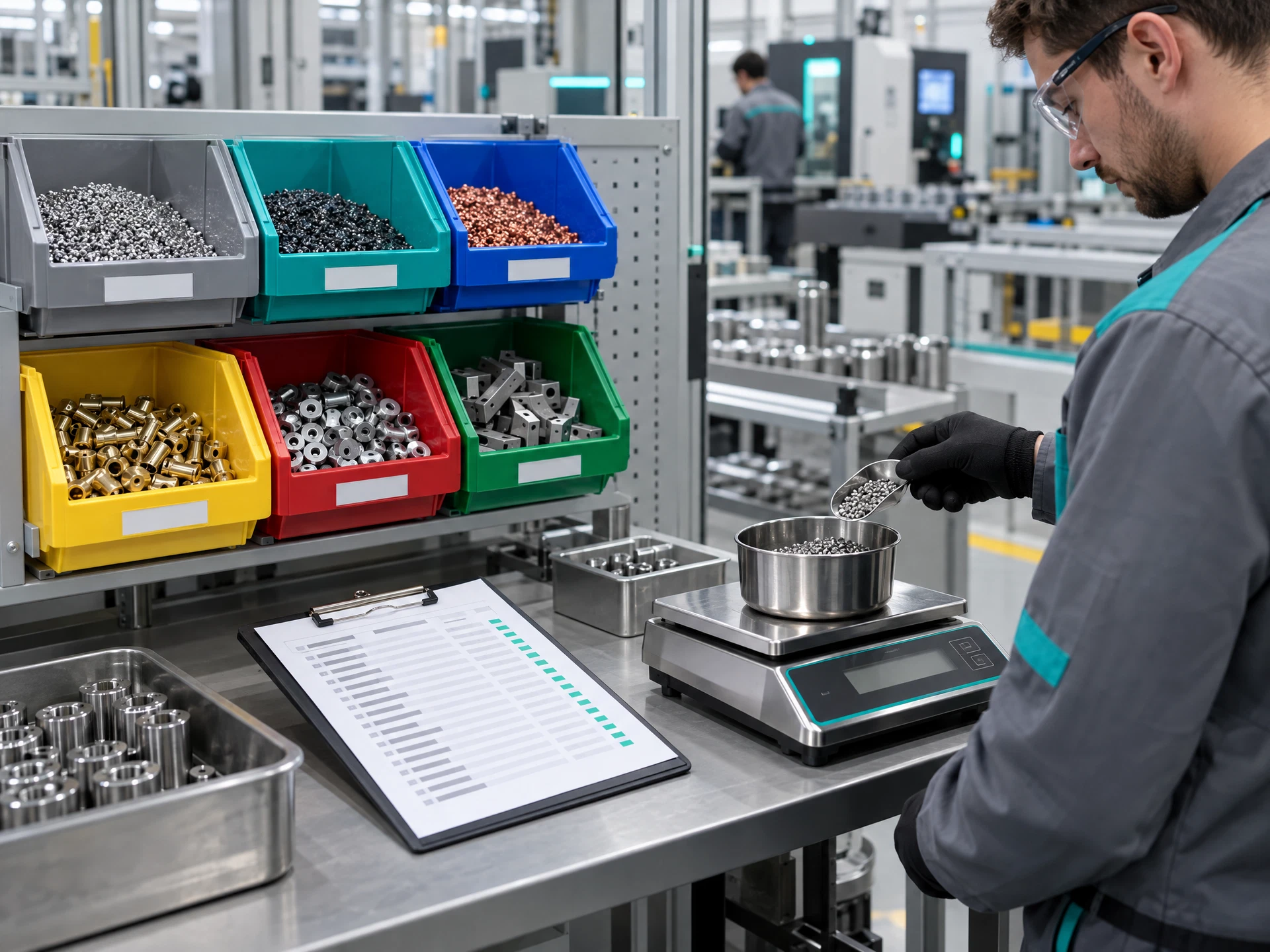
Image status: generating — final scene not yet confirmed.
This workflow compares material issued, returned or recorded against an approved bill of materials or production standard for a batch or work order. It helps production, stores and cost-control teams spot records needing explanation, produce a review summary and retain comparison evidence. AI can draft questions, but an authorised person confirms the standard, cause, disposition and any adjustment before any operational or cost decision is made.
01 / SEE THE OUTPUT
Material Variance Review Board
FICTIONAL SAMPLE / Week 18, three production batch groups. A clear view of the records, calculations and exceptions your team may need to review.
PROPOSED DASHBOARD CONCEPT
FICTIONAL SAMPLE / Week 18, three production batch groupsMaterial Variance Review Board
Absolute variance by batch group
Fictional sample values · Fictional absolute row differences only.
Unit: kg
| Batch group | Standard input (kg) | Actual issued (kg) | Variance (kg) | Review status |
|---|---|---|---|---|
| Batch group A | 240 | 252 | 12 | Review |
| Batch group B | 180 | 174 | -6 | Aligned for review |
| Batch group C | 300 | 318 | 18 | Review |
AI-assisted draft / requires verification
Draft only: reconcile timing, units and BOM; no cause or disposition.
02 / THE WORKFLOW
Five steps, with an accountable owner.
The example separates deterministic checks from AI-assisted drafts, exceptions and decisions.
- 01↓
Define the standard
Set approved basisSet BOM revision, unit and review context.
OWNER / CONTROLEngineering/planning - 02✓
Gather transactions
Collect batch recordsGather anonymised issue, return and quantity records.
OWNER / CONTROLStores/data owner - 03≡
Reconcile consumption
Calculate varianceAlign units and revisions; calculate signed and absolute differences.
OWNER / CONTROLMaterials analyst - 04◎
Route exceptions
Route exceptionsGroup unusual records and draft questions.
OWNER / CONTROLProduction control - 05↗
Approve the record
Approve outcomeRecord explanation, disposition and owner.
OWNER / CONTROLOperations manager
If a check fails: Hold the record for its owner, correct the source and preserve the approved manual fallback.
03 / RESPONSIBILITIES
Automate the repetition. Keep the judgment.
| Task | Manual today | Proposed assistance | Human review / owner |
|---|---|---|---|
| Collect issue/return records | Copy logs; chase gaps. | Assemble a source-linked packet. | Data owner confirms completeness and units. |
| Align BOM and quantity | Find the applicable standard. | Surface revision mismatches. | Planning confirms the standard. |
| Calculate variance | Build formulas and list rows. | Calculate differences using agreed rules. | Materials staff validate context. |
| Document disposition | Email explanations; update tracker. | Draft summary and actions. | Authorised person closes each exception. |
Show the standard
Show the approved standard beside each usage result.
Prioritise by batch
Use agreed fields to prioritise questions.
Connect the evidence
Link issue, return and batch references.
Track disposition
Provide owner, approval and next-action fields.
04 / TRANSPARENT FIGURES
Show the working behind the claim.
These numbers show one hypothetical calculation method. They are not customer evidence.
HYPOTHETICAL WORKED EXAMPLE / NOT CUSTOMER RESULTS
45 → 25 combined labour minutes for the same task.
36 one material-variance review packet units per month × 20 minutes less per unit.
8 → 3 per 100 checked error-affected administrative entries, not incidents/accidents/disease/product defect outcomes (5.0 percentage points).
See assumptions and calculations
| Measure | Illustrative calculation | Meaning and limit |
|---|---|---|
| Labour effort | (45 − 25) ÷ 45 × 100 = 44.4% | Same workload and expected review quality; includes ongoing exception checks as scoped. |
| Time capacity | (45 − 25) × 36 ÷ 60 = 12.0 hours | Released time is not payroll savings or guaranteed job reduction. |
| Admin checks | (8 − 3) ÷ 100 = 5.0 percentage points; 62.5% relative | Hypothetical administrative check: 8 affected entries per 100 before and 3 after; not a safety, product-quality, waste or outcome guarantee. |
Hypothetical same-workload month: manual collection and spreadsheet review take 45 minutes per packet; proposed drafting and routing take 25 including review. Pilot measurement is required.
Scenario figures are illustrative arithmetic, not benchmarks, forecasts, actual customer results or guarantees. Measure a like-for-like pilot with the same definitions before making a claim.
05 / PROPOSED DELIVERY
Scope one process, then measure it.
Confirm scope and rules
Select a material family, population, unit, BOM rule and reviewers.
What you receiveScope sheet and approval matrix.Map and test records
Anonymise extracts; map fields; test missing units, returns, revisions and duplicates.
What you receiveField map and test log.Configure draft review
Create calculations, evidence links, questions and manual fallback.
What you receiveReview prototype and checklist.Pilot and hand over
Run packets alongside the current process and compare predefined measures without claiming a result.
What you receivePilot findings and handover plan.06 / BEFORE YOU INVEST
Inputs, boundaries and ownership should be clear.
What to prepare
- Approved BOM or production-standard revision — engineering/planning
- Batch or work-order quantity and completion record — production planning
- Material issue, return and transfer transactions with units — stores/system owner
- Scrap, rework and remaining-quantity records — production/quality
- Variance rules and approval matrix — operations/cost control
What to agree in writing
- Compare approved records and revision; ambiguous units remain review exceptions.
- Drafts only; no machinery control, product release, stock adjustment or material orders.
- Use anonymised references and least-necessary access; qualified Malaysian privacy/security review is required.
- An authorised reviewer verifies calculations and approves every disposition or master-data change.
- Interfaces, access, retention, testing, licences, training, fallback, support and recurring costs require written agreement.
Confidence comes from traceable evidence.
Define the baseline and acceptance criteria before a pilot, trace outputs to approved sources, record review and exception effort, and make a scale/revise/stop decision with the process owner.
07 / CLEAR ANSWERS
10 questions. Practical answers.
Clear answers
Frequently asked questions.
Ten workflow-specific questions on scope, integration feasibility, controls, costs and measurement.
What does it compare and produce?
It compares an approved BOM or production standard with issue, return, transfer and batch quantities. Output is a source-linked variance table, questions and draft summary. A reviewer decides justification and changes.
Can it use our existing systems?
Possibly, subject to formats, exports, identifiers and data quality. AIGreen Plus would map an approved sample and agree a manual fallback; this record claims no ready-made ERP connector or live access.
What data should we prepare?
Prepare an approved BOM revision, sample batch quantities, issue and return fields, units, scrap or rework records and the review rule. Use anonymised extracts and name source owners and approver before the initial discussion.
Who approves a flagged variance?
An authorised operations, production or materials authority decides after checking the batch, standard revision, units, timing and scrap/rework evidence. Engineering or planning confirms the standard; stores confirms transactions before closure.
Are minutes guaranteed labour savings?
No. The minutes are hypothetical, not a forecast. Measure packet counts, preparation, review, exception effort and quality in a pilot. Released hours do not mean payroll savings or job elimination.
Are dashboard numbers actual?
No. Dashboard rows, chart values and scenario numbers are fictional. They illustrate calculation and presentation only, not customer evidence, benchmarks, measured savings, waste reduction or performance guarantees of future outcomes.
How are privacy and access handled?
Use least-necessary role-based access and anonymised batch references, with agreed retention, audit and deletion controls. Qualified Malaysian privacy/security advisers should review obligations; this is not compliance certification or legal opinion.
How long will delivery or a pilot take?
Timing depends on source readiness, BOM discipline, approvals, testing and interfaces. Confirm milestones after discovery and written scope. No fixed duration is promised; manual review remains available throughout testing and handover.
What drives the quotation and any recurring cost?
Scope, material families, volume, data preparation, interfaces, environments, controls, testing, training, support and changes affect cost. A written proposal is required; no setup fee, subscription price or savings return is stated.
Who owns it after handover?
Client owners should cover standards, data, reviewer decisions and access, with an escalation route. Support hours, monitoring, maintenance, retraining, changes and service levels require written agreement; 24/7 support is not promised.
START WITH ONE REPEATABLE TASK
Discuss the workflow ↗Discuss Material Consumption & Variance Control for your operation.
Share the process and the type of information involved—not confidential records. We can discuss discovery, access boundaries and an agreed way to measure a scoped pilot.
New AI-created images are fictional scenes; the production-reporting photograph is licensed Pexels stock. None depicts actual AIGreen Plus staff, clients, facilities, workflows or results.
All dashboard values and benefit scenarios are fictional; the screen is not a live integration. Workflows, system access, privacy, responsibilities, licences, costs and support require written scope. No ranking, savings, staffing, safety, quality or compliance outcomes are guaranteed.
